
The usual version of this story goes: psalms, then chant, then hymns, then organs, then guitars. It is a story about instruments, and the instruments are the least interesting thing that changed.
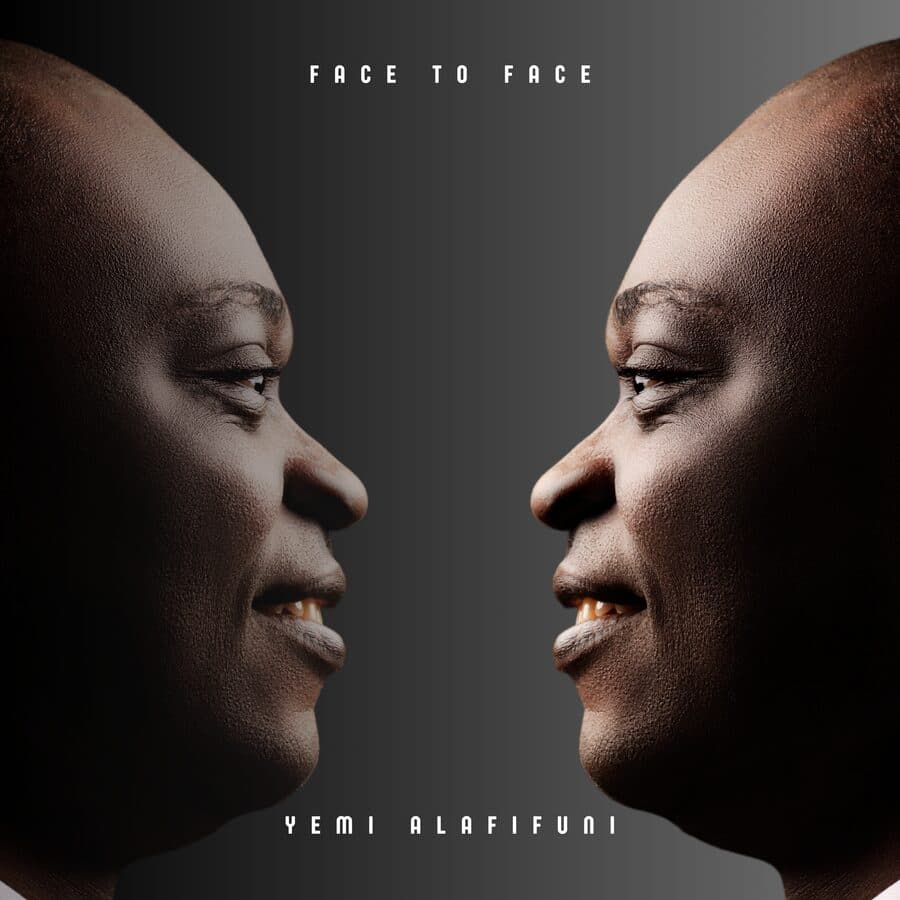
Free downloadMP33:09
Face to Face
Begun at 11:07 pm on 10 March 2019 and abandoned. The melody arrived five years later, almost to the day.
No email, no account, no catch. Yours to keep, and yours to play to a congregation.
Three things actually changed, and none of them is a sound.
Who was allowed to write. For most of church history the answer was clergy, then educated men, then, from the middle of the nineteenth century, people whose grandparents had been property.
What could be counted. Before 1988 there was no systematic record of what churches actually sang on a Sunday. Then there was, and everything downstream of that number changed.
Where the songs come from. On 30 December 2015 a woman in Lagos released a song. By June 2020 it was top of the CCLI Top 100, the chart of what licensed churches sing.
What follows is the history with dates on it, the disputes left in, and the sources given so you can check any of it. I am a Christian artist and a former worship leader, so I am not neutral; where I have a view I will say so, and where the evidence runs out I will say that too.
When did Christian music start?
Christians were singing within a generation of the crucifixion. The earliest evidence sits inside the New Testament itself and in a Roman governor's correspondence. The earliest music anyone can actually hear is two centuries later than that.
The first-century evidence
The Gospels record singing at the Last Supper:
When they had sung a hymn, they went out to the Mount of Olives.
Matthew 26:30, NIVUK
Commentators identify what they sang as the Hallel, Psalms 113 to 118, sung at Passover. That identification comes from rabbinic sources on the Passover liturgy which were written down later than the Gospels, so it is a reasonable reconstruction rather than a documented fact.
Then there are the passages many scholars read as pre-existing hymns quoted by Paul: Philippians 2:6–11 and Colossians 1:15–20 chief among them. Ernst Lohmeyer made that case in Kyrios Jesus in 1928 and Martin Hengel developed it, and it became the dominant twentieth-century view. It is now genuinely contested. Benjamin Edsall and Jennifer Strawbridge, writing in the Journal for the Study of the New Testament in 2015, pointed out that although these are among the most quoted Pauline passages in early Christian literature, no early Christian writer ever calls either of them a hymn, and argued that the assumption should be abandoned rather than swapped for another label. The New Testament scholar Larry Hurtado, responding in May 2015, treated the challenge as serious: he warned that "what begins as a plausible hypothesis can become a presumed fact too readily, and this may be the case with these two texts", and said their arguments "should not be side-stepped, but should be considered carefully". So: probably hymns, possibly not, and anyone who tells you it is settled has read one side.
The first outside witness, around AD 112
Pliny the Younger, governor of Bithynia-Pontus, wrote to the Emperor Trajan about what to do with Christians. His account of their meetings is the earliest description of Christian worship by someone outside it:
quod essent solitī statō diē ante lūcem convenīre, carmenque Chrīstō quasi deō dīcere sēcum invicem
Usually translated: that they were accustomed to meet on a fixed day before dawn, and to sing responsively a hymn to Christ as to a god.
Worth knowing before you quote it. The Dickinson College commentary carries H. M. Kingery's note that carmen means "hymn," "or perhaps better 'responsive reading' or liturgy; dicere rather favors the latter". The verb means to say or recite. And sēcum invicem, to one another in turn, could describe antiphonal singing or two halves of a room alternating a spoken text. So Pliny proves Christians met before dawn and addressed something to Christ as to a god. Whether they sang it is probable rather than certain.
The earliest Christian music that survives
P.Oxy. XV 1786, the Oxyrhynchus hymn. A scrap of papyrus from late third-century Egypt carrying a Greek hymn to the Father, Son and Holy Spirit and, above the words, musical notation in the ancient Greek vocal system. It is the only surviving fragment of notated Christian Greek music from the first four hundred years of the Christian period, and that qualifier matters: it is a claim about what has survived in one language, not about everything that was sung.
It was identified in 1918 among the Oxyrhynchus material and published in 1922 by Bernard Grenfell and Arthur Hunt in volume XV of The Oxyrhynchus Papyri. The papyrus is held in Oxford, in what is now the Bodleian Art, Archaeology and Ancient World Library.
So the honest answer to "when did Christian music start" is: the singing is first-century, the earliest surviving tune is third-century, and there is a two-hundred-year silence in between that no amount of confident writing can fill.
The timeline
What the early church argued about, and it was not style
The first serious argument about church music was about instruments, and it was fiercer than anything a modern congregation has managed.
The evidence is gathered by the same James McKinnon who appears later in this article, in his study of the patristic polemic against instruments. John Chrysostom, who died in 407: "Where aulos-players are, there Christ is not." He called cymbals and pipes the devil's rubbish heap. Clement of Alexandria attacked banqueters with their pipes and psalteries. Tertullian told Christians to hate the instruments of the theatre. A fourth-century Alexandrian canon prescribed seven weeks' penance for a cantor who confessed to learning the kithara and would not give it up, and expulsion if he persisted.
Read carelessly, that is a blanket ban. Read properly, it is not. Every one of those objections is aimed at what instruments were for in that world: pagan cult, the theatre, and the drinking party. The fathers are not making an argument about acoustics. They are making an argument about association, in a culture where a pipe meant a specific and disreputable thing.
Which matters, because the Bible they read is not shy:
All the Levites who were musicians – Asaph, Heman, Jeduthun and their sons and relatives – stood on the east side of the altar, dressed in fine linen and playing cymbals, harps and lyres. They were accompanied by 120 priests sounding trumpets.
2 Chronicles 5:12, NIVUK
A hundred and twenty trumpets. And the Psalter does not end quietly either:
Praise him with the sounding of the trumpet, praise him with the harp and lyre, praise him with tambourine and dancing, praise him with the strings and pipe, praise him with the clash of cymbals, praise him with resounding cymbals. Let everything that has breath praise the LORD. Praise the LORD.
Psalm 150:3–6, NIVUK
Whatever the fathers were objecting to, it was not the noise as such.
The most honest voice in the argument is Augustine, writing about himself.
Confessions X.33. He confesses that when the singing moves him more than the thing sung, he has "sinned criminally", and admits he vacillates "between dangerous pleasure and tried soundness".
He recalls that Athanasius' way, the reader of the psalm using so slight an inflection that it was "more like speaking than singing", seemed to him "safer". He does not adopt it. He ends by inclining, "though I pronounce no irrevocable opinion upon the subject", to approve of singing in church. Sixteen hundred years later, every worship leader who has wondered whether the room was moved by God or by the key change is having Augustine's argument, and reaching Augustine's answer.
Ambrose, and the myth about Gregorian chant
Around 386, during the Arian crisis in Milan, Ambrose kept his congregation in the church overnight and had them sing. Augustine was there, and describes it in Confessions Book IX:
At this time it was instituted that, after the manner of the Eastern Church, hymns and psalms should be sung, lest the people should pine away in the tediousness of sorrow.
Augustine, Confessions IX
And, a few lines earlier: "How greatly did I weep in Your hymns and canticles, deeply moved by the voices of Your sweet-speaking Church!" That is congregational singing arriving in the Latin West, under political siege, as a way of holding a frightened room together.
Gregory the Great did not write Gregorian chant
The legend is old and there are medieval pictures of it: Pope Gregory I, who reigned from 590 to 604, receiving the chant by dictation from a dove.
What the earliest source actually claims is much smaller. John the Deacon, writing Gregory's biography around 872, says he compiled a patchwork antiphonary. Not that he composed anything.
The scholarly position is that the repertory we call Gregorian was formed considerably later and somewhere else. Willi Apel and Robert Snow state a consensus that it developed around 750 as a synthesis of Roman and Gallican chant, commissioned by the Carolingian rulers in France. James McKinnon, in The Advent Project: The Later Seventh-Century Creation of the Roman Mass Proper (2000), argued that the core of the Mass Proper was compiled over a short period in Rome in the later seventh century, before any Frankish involvement. Andreas Pfisterer and Peter Jeffery push back within that consensus, arguing older Roman melodic material is still demonstrably embedded in it. The datable markers are Pope Stephen II celebrating Mass with Roman chant in Gaul in 752–53, and Pope Adrian I sending a sacramentary with Roman chants to Charlemagne's court in 785–86.
What is still argued about is the relative weight of Roman and Frankish contributions. What is not argued about is that the music is Carolingian and the name is a tribute.
Guido of Arezzo is the reason any of it could be written down and transmitted. His Micrologus dates to about 1025–26 and his Epistola de ignoto cantu to about 1028–33. He gave the West four-line staff notation and the syllables ut-re-mi-fa-sol-la, taken from the successive opening pitches of the hymn Ut queant laxis. The Guidonian hand, the diagram on the palm, is only rudimentary in what he actually wrote and cannot securely be credited to him.
The Notre Dame school, roughly 1160 to 1250, produced the first named composers of polyphony: Léonin and Pérotin. Both are known almost entirely through a later English student conventionally called Anonymous IV, and no manuscript of the Magnus Liber Organi survives from before the 1230s. Two of the most famous names in Western music history rest on one anonymous witness.
The Reformation, and the argument that has never ended
Two reformers looked at the same Bible and reached opposite conclusions about congregational song. Their churches are still arguing five hundred years later.
Martin Luther put hymns into people's mouths in their own language. The year is 1524: the Achtliederbuch printed at Nuremberg by Jobst Gutknecht, the Erfurt Enchiridion, and Johann Walter's Eyn geystlich Gesangk Buchleyn at Wittenberg, thirty-two sacred songs, twenty-four of them Luther's, set for three to five voices. "Ein feste Burg ist unser Gott" first appears in datable print in three publications of 1529. Hymnology Archive says only that the hymn is "sometimes believed" to date from around the second Diet of Speyer that April; no source I found establishes that link, and Robin Leaver cautions against reading the hymn as "a vehicle of belligerent and provocative Protestantism" at all. I would not repeat the Speyer story as fact.
Luther is constantly quoted as saying music is, next to theology, the greatest gift of God. That exact sentence appears to be a composite. Two things he did write, with citations:
Next to the Word of God, music deserves the highest praise. -- Preface to Georg Rhau's Symphoniae iucundae, 1538 · Luther's Works 53:323
…except for theology there is no art that could be put on the same level with music. -- Letter to Ludwig Senfl, 4 October 1530 · Luther's Works 49:427–28
John Calvin went the other way. His psalters run from the Strasbourg Aulcuns Pseaulmes of 1539, through Geneva in 1542 and 1551, to the complete 150-psalm Genevan Psalter of 1562, with texts by Marot and de Bèze and tunes by Franc, Bourgeois and Davantès. Calvin was not against singing at all: his preface of 10 June 1543 says singing "has great force and vigor to move and inflame the hearts of men". He was against singing anything but Scripture, and against instruments, which he read in his Psalms commentary as belonging to Israel's pedagogy under the Law and fulfilled in Christ.
That fork held. Exclusive psalmody was normative in Reformed churches for roughly two centuries, and Reformed Presbyterian congregations still sing psalms unaccompanied today. A disagreement opened in 1539 that has not closed.
The Council of Trent, meeting on this question in 1562–63, is usually credited with nearly banning polyphony and being talked out of it by Palestrina's Missa Papae Marcelli. That story is a legend. Trent issued one substantive musical injunction, against music that is "lascivious or impure", aimed at Mass settings built on secular tunes with objectionable words. The dramatic version of the Palestrina story was largely supplied by Giuseppe Baini's 1828 biography. Papal chapel diaries confirm a meeting took place in 1565 and say nothing about which music was performed or how anyone reacted.
"Hymns of human composure"
English congregations sang metrical psalms, on the principle that only inspired Scripture should be sung. Writing new words for church was the innovation, and it was resisted.
Benjamin Keach, a Particular Baptist at Horsleydown in Southwark, introduced congregational hymn singing and defended it in print in The Breach Repaired in God's Worship (1691). A minority of his own congregation left rather than sing them. Isaac Marlow had already argued against congregational singing in print (Keach's title page advertises itself as an examination of Marlow's papers) and closed the exchange with The Controversie of Singing Brought to an End in 1696. My source for that sequence is a confessional Baptist history rather than an academic one, so treat the dates as plausible rather than settled.
Isaac Watts is called the father of English hymnody because he made the innovation stick. Hymns and Spiritual Songs appeared in 1707 and The Psalms of David Imitated in the Language of the New Testament in 1719. Counts of his output vary between roughly 600 and 750; I could not find an authoritative bibliographic figure, so I will not give you one.
Charles Wesley wrote, on the Methodist hymnologist Frank Baker's calculation, 8,989 hymns, an average of ten lines of verse a day for fifty years. John Wesley's Collection of Hymns for the Use of the People Called Methodists (1780) runs to 525 hymns: mostly Charles's, with some of John's own and a handful from other authors, Watts among them.
And in 1640, in Cambridge, Massachusetts, The Whole Booke of Psalmes Faithfully Translated into English Metre became the first book printed in British North America. The first thing the English colonists put on a press was a psalter.
Writing a new song for church stopped being an innovation a long time ago. It did not stop being slow. The one at the top of this page sat unfinished for five years.

The first great change: who was allowed to write
Everything above was written by clergy and educated men. The most consequential thing that happened to Christian music happened when that stopped being true.
1867. Slave Songs of the United States, edited by William Francis Allen, Charles Pickard Ware and Lucy McKim Garrison, collects 136 songs transcribed largely from formerly enslaved people at Port Royal, South Carolina. It is described in the standard reference accounts as the first published collection of African American music of any kind.
6 October 1871. Nine students leave the Fisk campus in Nashville under George Leonard White, the university's treasurer and music professor, to raise money for a university founded for freed people and five years from bankruptcy. They took the name Jubilee Singers, sang for President Grant in March 1872 and for Queen Victoria in April 1873, and raised something like $40,000 on the domestic tours and $150,000 in Europe between 1875 and 1878, enough to build Jubilee Hall, which still stands. Those figures come from a Wikipedia synthesis rather than the Fisk archive itself, so treat them as approximate.
The Watts connection is documented, not folklore. William T. Dargan's Lining Out the Word: Dr. Watts Hymn Singing in the Music of Black Americans (University of California Press, 2006) traces how Watts's texts were taken up and remade in Black worship through lining-out: slow, melismatic, call-and-response. An English Dissenter's hymns, sung back in a form he would not have recognised.
1874–76. Philip P. Bliss and Ira D. Sankey attach the word "gospel" to collections of music, and it enters wide use through Moody's campaigns. I have written about what "gospel" actually means and how it became a genre elsewhere; Philip is also the man who wrote the tune for "It Is Well With My Soul".
1932. Thomas A. Dorsey, who had spent the twenties recording blues as Georgia Tom, loses his wife and newborn son and writes "Take My Hand, Precious Lord". He takes the music post at Pilgrim Baptist in Chicago the same year and founds the National Convention of Gospel Choirs and Choruses in 1933. WTTW's history of Chicago gospel records that ministers dismissed what he was doing as "sinful or 'devil's' music", and quotes Thomas himself saying he was "thrown out of some of the best churches in America".
Then the quartets and the voices: the Soul Stirrers from 1926, with Sam Cooke leading from 1950 until he left for a pop career in 1956–57 (accounts differ on which side of the new year he went); the Golden Gate Quartet from 1934, at Carnegie Hall for "From Spirituals to Swing" in 1938; Mahalia Jackson recording "Move On Up a Little Higher" on 12 September 1947, a record whose oft-quoted eight million sales I could not trace to an audited figure.
And Andraé Crouch, whose first album with the Disciples, Take the Message Everywhere, came out in 1968 and who won seven Grammy Awards. He is routinely left out of the standard telling of contemporary Christian music, which begins a year later with a white folk-rock record. That omission is worth noticing.
The second great change: what could be counted
The Jesus Movement
Chuck Smith arrived at a 25-member Calvary Chapel in Costa Mesa in December 1965. Larry Norman's Upon This Rock came out on Capitol in December 1969 and is widely called the first Christian rock album, though the sources that say so hedge it as "considered by many", and Andraé's 1968 record is an obvious earlier contender.
Explo '72 ran in Dallas from 12 to 17 June 1972. Around 80,000 attended the daytime sessions, with the nightly gatherings at the Cotton Bowl; estimates for the eight-hour closing festival on 17 June, held on cleared ground north of downtown Dallas, run from 100,000 to 200,000. Love Song, Larry Norman, Andraé Crouch and the Disciples, Johnny Cash and Kris Kristofferson played. It is frequently credited with launching the Christian music industry.
The industry was already assembling around it: the Gospel Music Association founded in 1964, the first Dove Awards at the Peabody Hotel in Memphis in October 1969, Maranatha! Music out of Calvary Chapel in 1971, and CCM Magazine launching in July 1978 with the genre's name on the masthead.
1988, and the number that changed everything
Here is the part of the story almost nobody tells, and it is the most important thing in this article after the Reformation.
Before 1988 there was no systematic record of what churches actually sang.
A hymnal's contents told you what a denomination had authorised, and hymnal sales told you what churches bought. Neither is the same as what a room sang last Sunday. And once congregations moved from hymnals to overhead projectors, even that weak proxy disappeared: they were reproducing copyrighted lyrics on a mass scale with no mechanism to license it and no record of what was being used.
CCLI, Christian Copyright Licensing International, was founded in 1988 by Howard Rachinski, a music minister in Portland, Oregon, from a prototype he had begun in 1985. The model is a blanket licence: a church pays an annual fee scaled to its size, gains the right to reproduce and project songs in the catalogue, and reports what it used. Most of the fee goes back to songwriters and publishers as royalties.
The licence solved a real legal problem honestly. It also, as a by-product, produced the first large-scale record of congregational song usage: for the churches that hold a licence, which is not the same as all of them, and skews English-speaking and evangelical. And once a thing is measured it can be charted, and once it is charted it can be aimed at.
Look at what happens next.
Hillsong, founded in 1983 as Hills Christian Life Centre by Brian and Bobbie Houston, with Hillsong Music from 1991, records Shout to the Lord in 1995, led by Darlene Zschech, released in 1996 through Integrity's Hosanna! Music. Passion begins in 1997 with 2,000 students and now gathers tens of thousands. Bethel Music grows out of Bethel Church in Redding through the 2000s. Elevation Worship begins in 2007 and has sold over 1.5 million albums in the United States.
The same era produced its own push-back. In 1999 Matt Redman, in England, released "The Heart of Worship", a song written after his church deliberately stripped out the sound system and the band to see what was left. Matt has said it nearly never got out of his bedroom. It became one of the most-sung songs of the decade, which is worth noticing: the movement's own correction to itself went straight onto the same charts as everything else.
Then the finding. In March 2023 the Worship Leader Research team (Shannan Baker, Elias Dummer, Marc Jolicoeur, Adam Perez and Mike Tapper) published an analysis of the 38 songs that reached top-25 worship charts between 2010 and 2020. Thirty-seven of the 38 were associated with just five megachurches (Bethel, Hillsong, Elevation, Passion and North Point Community Church) and 35 with four of them: Bethel, Hillsong, Elevation and Passion. Christianity Today covered it on 12 April 2023 and reported the figure slightly differently, as 36 of 38 tied to the four churches. I cannot reconcile that discrepancy from the sources available to me; the direction of the finding is not in doubt.
Put another way: of the 38 songs that reached the top of the worship charts in that decade, the research team found 35 tied to four churches in four cities. That is a finding about what rose to the top of a chart, not about everything congregations sang, but it is the chart everyone plans a Sunday from.
And then the measure moved
On 23 September 2024, CCLI changed how the Top 100 is compiled: from six-month church usage reports, weighted by congregation size and tied to royalties, to weekly SongSelect download data. The Worship Leader Research team reported the change on 5 February 2025, quoting CCLI's chief technology officer George Ross describing it as a more hands-on approach closer to the real-time charts used in the wider music industry. I could not find a CCLI press release stating it directly, so that account rests on a trade analysis rather than a primary source.
It matters because downloads are not attendance. A weekly download count is unweighted by church size and plausibly favours new songs over established ones. The number everyone in this industry looks at is now measuring something different from what it measured before, and very few people noticed.
The third great change: where the songs come from
On 30 December 2015, Sinach, Osinachi Kalu Okoro Egbu, from Lagos, released "Way Maker" on a live album.
What happened next has no precedent. The original video passed 100 million views on YouTube by 7 March 2019. Leeland released a version on 16 August 2019 and Michael W. Smith on 1 February 2020, and on the Hot Christian Songs chart dated 11 April 2020 Smith's version sat at number 3 and Leeland's at number 9, which Billboard reported as the first time in that chart's history two versions of the same song had been in the top ten at once. In May 2020 Sinach topped Billboard's Christian Songwriters chart. In June 2020 "Way Maker" reached number one on the CCLI Top 100. In October 2020 it won Song of the Year at the Dove Awards.
A Nigerian woman wrote the song the English-speaking church sang most.
There is an argument attached, and it is not resolved. Anneli Loepp Thiessen, writing for the Center for Congregational Song, argued that Sinach's authorship was widely overlooked as Western covers spread and that many congregations met the song without knowing who wrote it. In the comments beneath that piece, one reader pointed out that Passion's own YouTube video credits Sinach by name; another replied that Passion changed those credits after the article appeared. Both things look true to me: the credit existed, and a great many people singing the song did not know whose it was.
The number that would settle the bigger question does not exist. I looked for a study measuring how many songs in the CCLI Top 100 originate outside the United States, the United Kingdom and Australia, and could not find one. The nearest thing is the United Methodist "CCLI Top 100 + Beyond" project, running since 2015 and expanded in 2020, which is a curatorial response to the absence of Black, Latin, Asian and global songs from those lists rather than a count of them. That the number has not been produced is itself worth saying out loud.
What can be measured is that the audience is growing. Luminate's 2025 year-end report, covered by Religion News Service on 16 January 2026, put Christian and gospel on-demand audio streaming up 18.5% year on year in the United States, ahead of rock at 6.4% and Latin at 5.2%, and against a general slowdown in new-music streaming.
I have a stake in this section. I was born in Nigeria, I live and record in London, and my releases are filed under Christian and Gospel by distributors who have never asked where the writer is from. Sinach did not get in by being admitted. She got in because a congregation somewhere sang the song and then another one did.
What has not changed
Everything above is nineteen centuries of argument about form. Underneath it, the instruction has not moved, and it is stranger than either side of the traditional-versus-contemporary fight tends to admit.
Scripture commands new songs. The phrase "a new song" appears nine times: Psalm 33:3, Psalm 40:3, Psalm 96:1, Psalm 98:1, Psalm 144:9, Psalm 149:1, Isaiah 42:10, Revelation 5:9 and Revelation 14:3.
Sing to him a new song; play skilfully, and shout for joy.
Psalm 33:3, NIVUK
Two commands in one line, and the church has spent most of its history arguing about the first while neglecting the second. Play skilfully is not a concession to professionalism. It is in the sentence.
The Hebrew word is חָדָשׁ, chadash, Strong's 2319. When Revelation reaches for it, the Greek is καινός, kainos, Strong's 2537. Many commentators distinguish kainos, new in kind, from neos, new in time; others think that distinction is pressed harder than the usage will bear, so I will not build too much on it.
What the nine verses will carry is this. A church that will only sing what its grandparents sang is disobeying a plain and repeated instruction. And a church that replaces its songs every eighteen months because the chart moved has not thereby obeyed it either, because nothing in those verses is about recency.
The content is the constant.
Let the message of Christ dwell among you richly as you teach and admonish one another with all wisdom through psalms, hymns, and songs from the Spirit, singing to God with gratitude in your hearts.
Colossians 3:16, NIVUK
That is the whole brief, and it has survived chant, polyphony, psalters, hymnals, quartets, overhead projectors and streaming. The message of Christ, dwelling richly, taught and sung into one another.
Isaiah had already said where the new song would be coming from, seven centuries before anyone in this article was born:
Sing to the LORD a new song, his praise from the ends of the earth, you who go down to the sea, and all that is in it, you islands, and all who live in them.
Isaiah 42:10, NIVUK
From the ends of the earth. And the last new song in the Bible says who the singers are:
And they sang a new song, saying: 'You are worthy to take the scroll and to open its seals, because you were slain, and with your blood you purchased for God persons from every tribe and language and people and nation.'
Revelation 5:9, NIVUK
Every tribe and language and people and nation. That is not a prediction about market share and it is not a diversity statement. It is a description of who was bought, and therefore of who sings.
Which makes the history in this article read differently. A Milanese congregation under siege in 386, a Wittenberg printer in 1524, a woman lining out Watts in a South Carolina praise house, a man thrown out of the best churches in America for playing blues chords, and a songwriter in Lagos in 2015 are not a sequence of styles replacing one another. They are the same command being obeyed in different centuries by people who were promised in advance that they would be there.
The instruments changed. The permission widened. The song is still new, and it is still about the same three days.
Scripture quotations marked NIVUK taken from the Holy Bible, New International Version Anglicised, Copyright © 1979, 1984, 2011 Biblica. Used by permission of Hodder & Stoughton Publishers, an Hachette UK company. All rights reserved. 'NIV' is a registered trademark of Biblica. UK trademark number 1448790.
Sources
- Pliny, Letters 10.96 · Dickinson College Commentaries, for the Latin text and the carmen discussion
- The Oxyrhynchus hymn, P.Oxy. XV 1786; first published by Grenfell and Hunt, 1922
- Edsall and Strawbridge, "The Songs we Used to Sing?", JSNT 37.3 (2015)
- The Fisk Jubilee Singers' own history
- Larry Hurtado, "Are Philippians 2:6-11 and Colossians 1:15-20 Christ-Hymns?" (2015), on the absence of consensus
- Augustine, Confessions Book IX and Book X, New Advent
- James McKinnon, "The Meaning of the Patristic Polemic Against Musical Instruments", for Chrysostom, Clement, Tertullian and the canons
- Gregorian chant · the Carolingian synthesis, Apel, Snow, McKinnon, Pfisterer and Jeffery; Guido of Arezzo; the Notre-Dame school and Anonymous IV
- Johann Walter, Eyn geystlich Gesangk Buchleyn (1524); "Ein feste Burg" · Hymnology Archive, including Robin Leaver on the Diet of Speyer story
- Luther's two sourced statements on music, in Luther's Works 53:323 (1538) and 49:427–28 (1530), as documented by Christian History Institute
- The Genevan Psalter; Calvin's preface to the Psalter (1543); exclusive psalmody and how long it held
- The Missa Papae Marcelli legend and what Trent actually decreed, including Baini's 1828 biography
- Isaac Watts · Britannica; Charles Wesley's output, on Frank Baker's count · Christian History Institute; the Bay Psalm Book
- Slave Songs of the United States (1867); the Fisk Jubilee Singers; William T. Dargan, Lining Out the Word (University of California Press, 2006)
- WTTW, "Dorsey's Gospel"; Mahalia Jackson, "Move On Up a Little Higher"; Andraé Crouch at the Recording Academy
- Explo '72; Billboard on the two "Way Maker" versions in the Hot Christian Songs top ten; Larry Norman, Upon This Rock; the Gospel Music Association
- CCLI · founding and licence model
- Worship Leader Research, "(Almost) 100% of the Top 25 Worship Songs are associated with just a handful of Megachurches" (30 March 2023) and Christianity Today, 12 April 2023
- Worship Leader Research on the 23 September 2024 CCLI methodology change (5 February 2025)
- Sinach, "Way Maker" · releases, charts and awards; Anneli Loepp Thiessen, "The Overlooked Authorship of Way Maker"; the UMC "CCLI Top 100 + Beyond" project
- Luminate's 2025 year-end figures, via Religion News Service, 16 January 2026
- Word data from Bible Hub: chadash H2319 and kainos G2537