What should a church sing during Advent? The hymns written for the season: "O Come, O Come, Emmanuel", "Come, Thou Long Expected Jesus", "Lo! He Comes with Clouds Descending", "On Jordan's Bank the Baptist's Cry", "Wake, O Wake", "People, Look East", "Hills of the North, Rejoice", and the handful of modern songs genuinely about waiting rather than the manger: "Is He Worthy?", "Even So Come", "Waiting Here for You", "Fullness of Grace". Below, each mapped to the Sunday it fits in 2026, with the readings it sits against.
I have led enough Advent services to know the temptation. Everybody wants the carols on the last Sunday in November, and by the time Christmas arrives the congregation has sung "O Come All Ye Faithful" five times and is slightly sick of it. Advent has its own repertoire, most of it better than we remember, and four Sundays is not long.
Before any of that: my own Christmas record is free, and if you are planning the quiet end of the season it may be useful to you. It is a song about loneliness rather than a carol.
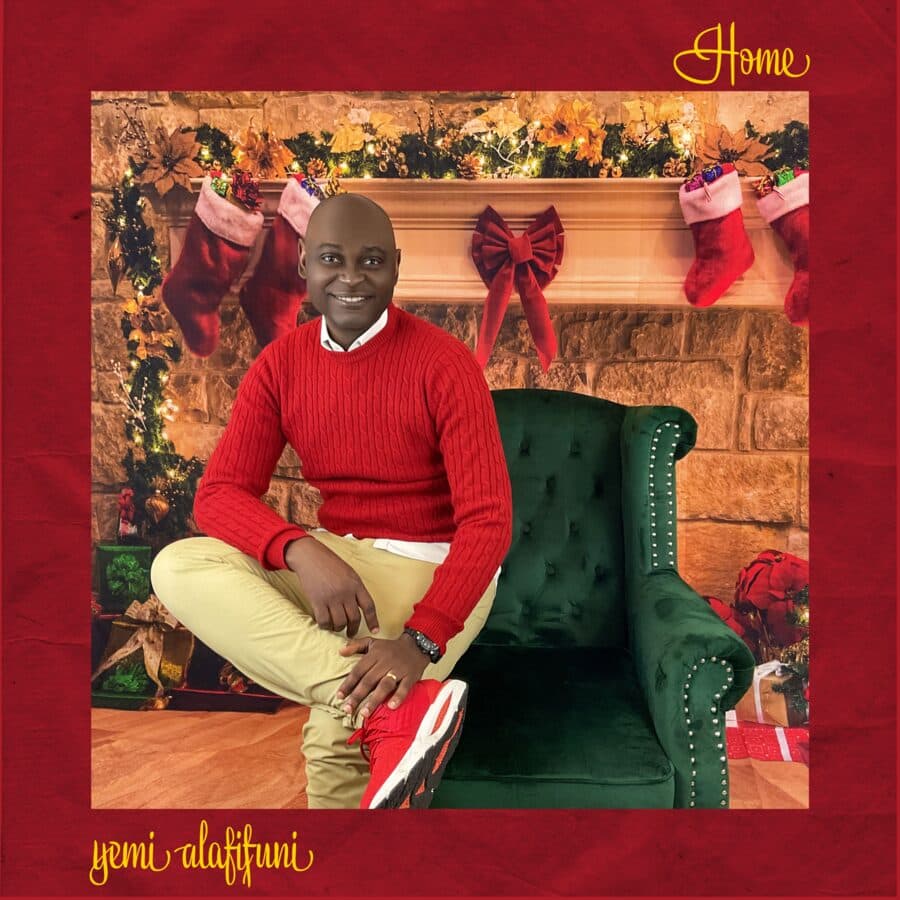
Free downloadMP33:26
Home
A Christmas song written to combat loneliness, which is a stranger brief than it sounds, and the reason this one is not just tinsel.
No email, no account, no catch. Yours to keep, and yours to play to a congregation.
When does Advent start in 2026?
Advent Sunday 2026 falls on 29 November, and the four Sundays of Advent are 29 November, 6 December, 13 December and 20 December. Advent 2027 begins on 28 November.
Two details worth having in the diary now.
Christmas Day 2026 is a Friday, and Advent 4 falls on 20 December; which lands inside the week of the O Antiphons, 17 to 23 December. That is a gift. The antiphon for the 20th is O Clavis David, O Key of David, so the corresponding verse of "O Come, O Come, Emmanuel" belongs on your final Sunday of Advent that year rather than at a midweek service nobody comes to. After it you have four weekdays, Monday the 21st to Thursday the 24th, carrying the last three antiphons into Christmas Eve.
And in 2028, Advent Sunday is 3 December and the fourth Sunday of Advent falls on Christmas Eve itself. That is the shortest possible Advent, twenty-two days, with Advent 4 in the morning and Christmas from that evening. Worth knowing two years out.
Which lectionary year is Advent 2026?
Advent 2026 begins Year B, the year of Mark. The lectionary turns over on Advent Sunday, not in January, which is the single most common mistake in church newsletters.
The Church of England's Common Worship lectionary follows the Revised Common Lectionary for the Principal Service and adds its own Second and Third Service readings. So if you are Anglican, the Principal Service readings below are yours, with one caveat about the psalms. Common Worship uses its own psalter numbering, which counts the Hebrew superscription, so Advent 1 appears there as Psalm 80:1–8, 18–20 rather than the 80:1–7, 17–19 printed below. Check against your own psalter before printing an order of service.
| Sunday | Old Testament | Psalm | Epistle | Gospel |
|---|---|---|---|---|
| Advent 1, 29 Nov | Isaiah 64:1–9 | 80:1–7, 17–19 | 1 Corinthians 1:3–9 | Mark 13:24–37 |
| Advent 2, 6 Dec | Isaiah 40:1–11 | 85:1–2, 8–13 | 2 Peter 3:8–15a | Mark 1:1–8 |
| Advent 3: 13 Dec | Isaiah 61:1–4, 8–11 | 126 or Luke 1:46b–55 | 1 Thessalonians 5:16–24 | John 1:6–8, 19–28 |
| Advent 4: 20 Dec | 2 Samuel 7:1–11, 16 | 89:1–4, 19–26 or Luke 1:46b–55 | Romans 16:25–27 | Luke 1:26–38 |
Look at the shape of that. Advent 1 is Mark's apocalypse, the Son of Man coming in clouds. Advent 4 is Gabriel in a room in Nazareth. The season moves from the end of the world to a teenage girl saying yes.
What actually makes a song an Advent song
The distinction is not sentiment. It is direction.
Advent looks two ways at once, and both traditions say so plainly. The Roman General Norms for the Liturgical Year describe it as "a season to prepare for Christmas when Christ's first coming to us is remembered" and equally "a season when that remembrance directs the mind and heart to await Christ's Second Coming at the end of time." Common Worship: Times and Seasons puts it almost identically: the Church "prepares to celebrate the coming (adventus) of Christ in his incarnation, and also looks ahead to his final advent as judge at the end of time."
There is even a date where the emphasis turns. The Roman norms specify that the weekdays from 17 to 24 December "serve to prepare more directly for the Lord's birth." Before the 17th, the season leans towards the return; after it, towards the nativity.
That gives a working rule for choosing songs, and it is the one I use. Before 17 December, sing about waiting, watching and the Lord who is coming back. From the 17th, let the nativity in. And a song like "O Come, O Come, Emmanuel" works throughout, because it is addressed to a Christ who has not yet arrived in either sense.
Test any song against it. Does this song place us before the event, or after it? "Lo! He Comes with Clouds Descending" is Revelation 1:7, and the singer is still waiting, so it belongs at the front of the season. "O Come All Ye Faithful" summons people to a manger that is already occupied. Both are excellent. Only one of them is Advent.
The four Sundays, with songs
Advent 1 · 29 November. Keep watch.
Mark 13 is the hardest gospel reading of the year to sing to, and the hymn tradition has an answer for it.
Therefore keep watch because you do not know when the owner of the house will come back – whether in the evening, or at midnight, or when the cock crows, or at dawn. If he comes suddenly, do not let him find you sleeping. What I say to you, I say to everyone: "Watch!"
Mark 13:35–37
"Lo! He Comes with Clouds Descending" is the strongest Advent 1 hymn in English and almost nothing else comes close. It is built on Revelation 1:7 and it does not flinch: "every eye shall now behold him, robed in dreadful majesty." Set to HELMSLEY it is genuinely frightening in the right way.
Its authorship is more tangled than most hymnals admit. John Cennick wrote "Lo! He cometh, countless trumpets blow" around 1750, published in 1752. Charles Wesley rewrote it substantially as "Lo! He comes with clouds descending" in Hymns of Intercession for all Mankind in 1758, under the heading "Thy Kingdom Come". Martin Madan then produced the composite version in 1760, mostly Wesley with some of Cennick restored, and Madan's composite is what congregations actually sing. Jubilate credits it "after J Cennick, C Wesley and M Madan", which is the honest way to do it. Hymnary.org records it in 820 hymnals, though that figure almost certainly sweeps up all three variants.
"Wake, O Wake" belongs here too, or on Advent 2. Philipp Nicolai wrote both words and tune in 1599, in the aftermath of a plague that had killed roughly 1,300 people in his Westphalian parish. It is Matthew 25: the wise and foolish virgins, lamps trimmed, the cry at midnight. Catherine Winkworth's English translation dates from 1858. A man who had buried that much of his congregation wrote the church's great song about staying awake.
"Is He Worthy?" is the modern equivalent and works better than most people expect. Andrew Peterson and Ben Shive wrote it in 2018; it is Revelation 5 in call and response, and it opens on the groaning of creation from Romans 8, "Do you feel the world is broken? We do." Sung antiphonally with the congregation answering, it does the same job Mark 13 does.
Advent 2 · 6 December. Prepare the way.
Isaiah 40 and the beginning of Mark. This is John the Baptist's Sunday.
A voice of one calling: "In the wilderness prepare the way for the Lord; make straight in the desert a highway for our God."
Isaiah 40:3
"On Jordan's Bank the Baptist's Cry" is the hymn written for exactly this. Charles Coffin, Rector of the University of Paris, wrote the Latin in 1736; John Chandler translated it in 1837, apparently under the impression that he was translating something medieval. It was barely a century old. Sung to WINCHESTER NEW. Hymnary records 246 hymnals, and notes that texts vary so widely between them that it is unusual to find two identical.
"Hark! A Thrilling Voice Is Sounding" goes back to a fifth or sixth-century Latin text, "Vox clara ecce intonat", revised in 1632 as "En clara vox redarguit", and translated by Edward Caswall in 1849. If your hymnal opens "Hark! a herald voice is calling" and your projector has "Hark! a thrilling voice is sounding", they are forms of the same translation as altered by different editors, though the sources disagree about which Latin recension sits behind which first line, and The New English Hymnal credits "herald voice" to "Vox clara" rather than to the revision. Hymnary counts both together, at 152 hymnals.
"Comfort, Comfort Now My People" sets Isaiah 40 directly and is worth finding if your congregation will take a hymn they do not know.
For a modern option, "Even So Come" (Chris Tomlin, Jason Ingram and Jess Cates, 2015) is a maranatha song, "like a bride waiting for her groom", straight out of Revelation 22. Hymnary records it in the printed CCLI Top 100 collections for 2016, 2017 and 2019, so it had a run without becoming a standard, but it does the Advent job.
Advent 3 · 13 December. Rejoice.
This is Gaudete Sunday, and the name is simply the first word of the day's traditional Latin introit: Gaudete in Domino semper, "Rejoice in the Lord always." It comes from Philippians 4:4.
Rejoice in the Lord always. I will say it again: rejoice!
Philippians 4:4
The rose candle and the rose vestments belong to this Sunday. In the Church of England they are permitted rather than required, the Diocese of London's Kalendar prints the rubric as "Rose Pink, may be used on Advent 3 and Lent 4". Common Worship explains it as a medieval practice, "a splash of colour in the restrained atmosphere of Advent".
The readings are Isaiah 61, the Spirit of the Sovereign Lord is on me, and John's testimony that he is not the light but came to bear witness to it.
"People, Look East" fits this Sunday better than any other. Eleanor Farjeon wrote it for The Oxford Book of Carols in 1928, to the French melody BESANÇON. It is the most joyful thing in the Advent repertoire and still about waiting: "Love the Guest is on the way." Only 49 hymnals, which is a shame.
"Hills of the North, Rejoice" is the other option, with a caveat worth knowing. Charles Oakley wrote it before his death in 1865 at the age of 33, and the original carries Victorian missionary language ("unvisited, unblest") that most modern books have revised. The version in Ancient and Modern (2013) comes from English Praise (1975). Chris Moorsom, writing for the Hymn Society of Great Britain and Ireland, points out that the revision also changed the last verse from "we" to "they", which shifts it from shared expectation to something more distant. Worth checking which text your book has.
"Waiting Here for You" is the modern fit: Chris Tomlin, Jesse Reeves and Martin Smith, 2010. It is frequently miscredited to Christy Nockels, who sang it on Passion's recording but did not write it.
Advent 4 · 20 December. The Annunciation.
Gabriel and Mary, and the Magnificat as the psalm.
Do not be afraid, Mary, you have found favour with God. You will conceive and give birth to a son, and you are to call him Jesus.
Luke 1:30–31
"Come, Thou Long Expected Jesus" is Charles Wesley's, first published in Hymns for the Nativity of Our Lord, dated 1744 in some sources and 1745 in others, so I would not print either flatly. It began as two eight-line stanzas; the four-verse form we sing is a later splitting. Hymnary records 785 hymnals, second only to "Lo! He Comes" among Advent texts. Sung to STUTTGART or HYFRYDOL. It holds both advents in four verses, "born to set thy people free" and "raise us to thy glorious throne", which makes it the best single hymn for a congregation that only learns one Advent song.
A setting of the Magnificat belongs here if you have anything at all: "Tell Out, My Soul", or a sung setting, or the Taizé Magnificat, which any congregation can hold after one hearing.
"Long Ago, Prophets Knew" by Fred Pratt Green, written in 1970, moves prophecy to Mary to incarnation and lands on "God is with us, alleluia! Come to save us." Note it is still in copyright (Stainer & Bell, 1971), so it must be reported under your CCLI licence, unlike most of the hymns above.
"Fullness of Grace" (Keith Getty, Kristyn Getty and Stuart Townend, 2004) is the modern Advent 4 song: "fullness of grace in man's human frailty, this is the wonder of Jesus."
Good songs that are not Advent songs
Three that turn up on Advent lists every year and do not pass the test above, all of them worth singing at the right moment.
"King of Kings" (Brooke and Scott Ligertwood with Jason Ingram, 2019) opens beautifully ("in the darkness we were waiting, without hope, without light"), and then covers the incarnation, the cross, the resurrection and Pentecost in three verses. It is a creed. By the end of the first verse the waiting is over, which is exactly what Advent is not.
"Prepare Him Room" (Rebecca Elliott and Dave Fournier, Sovereign Grace, 2014) has the right title and the wrong tense. "Christ is come" is a nativity announcement.
"Emmanuel (Hallowed Manger Ground)" (Chris Tomlin and Ed Cash, 2009) is a manger song and a good one. Christmas Eve.
None of that is a criticism of the songs. It is only that a season built on not-yet loses something if everything you sing is already.
The traditional Advent hymns, ranked by staying power
Hymnary.org records how many published hymnals a text appears in. It is a rough measure (it counts text pages rather than songs, and its collection leans North American, which under-counts British hymns), but as a proxy for durability it is the best public number available.
| Hymn | Written | Hymnals |
|---|---|---|
| Lo! He Comes with Clouds Descending | 1750–1760 | 820 |
| Come, Thou Long Expected Jesus | 1744/45 | 785 |
| O Come, O Come, Emmanuel | Latin 1710, tr. 1851 | 566 |
| On Jordan's Bank the Baptist's Cry | 1736, tr. 1837 | 246 |
| Of the Father's Love Begotten | c. 405, tr. 1854 | 242 |
| Wake, O Wake | 1599, tr. 1858 | 226 |
| Hark! A Thrilling Voice Is Sounding | 5th–6th c., tr. 1849 | 152 |
| Creator of the Stars of Night | 9th c., tr. 1852 | 99 |
| Hills of the North, Rejoice | by 1870 | 59 |
| People, Look East | 1928 | 49 |
| Long Ago, Prophets Knew | 1970 | 17 |
Two notes on that table. "Of the Father's Love Begotten" is really a Christmas text rather than an Advent one and works best at Advent 4 or in a carol service. And there are two different translations of it in UK use, Neale's "Of the Father's love begotten" from 1854, and R. F. Davis's "Of the Father's heart begotten" from 1906, which is the version in The New English Hymnal and Ancient and Modern, and which Hymnary records in only ten hymnals. British congregations are mostly singing the rarer one.
Where do the Advent candle themes come from?
If your church lights an Advent wreath, someone will ask what the candles mean. The honest answer is that hope, peace, joy and love has no authority behind it and is not old; the scheme was assigned by church supply companies selling wreaths and banners in the middle of the twentieth century, and the order most churches use today is not even the order they assigned. The Church of England's own scheme is different again, and better: the Patriarchs, the Prophets, John the Baptist and the Virgin Mary.
The United Methodist Church's "Ask the UMC" gives the clearest account I have found: as the practice spread, "several church supply houses who sold Advent wreaths and candles for public worship also developed resources, banners, and bulletin covers assigning a theme to each week". The themes they assigned were "Hope, Love, Joy, and Peace, in that order."
Note the order. The scheme most churches now use is Hope, Peace, Joy, Love. The two have swapped, within living memory, which tells you what kind of thing it is. The same source adds that those themes came from one-year lectionaries almost nobody uses any more, and that "the candles and the wreath are an accessory, not an end in themselves."
The Wisconsin Evangelical Lutheran Synod puts it more bluntly: "Since the custom has seen so many different adaptations, you will also find numerous explanations of the four candles": listing, for the first candle alone, the Prophecy Candle, the Hope Candle and the Expectation Candle.
Common Worship: Times and Seasons assigns the four Sundays to the Patriarchs, the Prophets, John the Baptist and the Virgin Mary, those "who prepared for the coming of Christ", with the centre candle for Christ on Christmas Day. That scheme has the advantage of tracking the actual readings: Advent 2 and 3 really are John the Baptist's Sundays, and Advent 4 really is Mary's.
Two details from the same text that often surprise people. Common Worship's stated default is "four red or blue candles in a ring around a white or gold candle", with three purple and one pink given as the alternative, so purple is not the assumed colour. And it names Christmas Day, not Christmas Eve, for lighting the centre.
The wreath itself is not ancient either. Common Worship describes it as "imported into Britain from northern Europe in the nineteenth century". The object as we know it is generally traced to Johann Hinrich Wichern, a Lutheran pastor at a Hamburg mission school, who in 1839 fitted a cartwheel ring with a small candle for each weekday of Advent and a large one for each Sunday. Accounts of the exact count differ; the usual telling is twenty-four small and four large, while Hamburg's own tourist board says the number varied year to year with the length of the season. Either way, our four-candle version is a simplification of his.
On the blue that many Anglican churches now use for Advent: the practice is real and Common Worship names blue as a default option, but the label "Sarum blue" implies a medieval Salisbury pedigree the evidence does not support. The ecclesiastical outfitters Watts & Co. state that "blue was not used for Advent in the pre-Reformation Sarum rite", attributing the name to the Victorian Gothic revival and Percy Dearmer. An analysis on the Pray Tell blog goes further, noting that surviving Sarum sources show colour use that was "local, informal, and loosely defined, at best", with Westminster using white for Advent, Wells blue, Exeter violet. Use the blue if you like it. The history attached to the name is a Victorian invention.
Should you sing carols during Advent?
This depends on which church you are in, and the guidance genuinely differs. Anyone who tells you there is one rule is wrong. Roman Catholic practice is restrictive and written down; the Church of England has no equivalent prohibition and offers provision instead of a ban. So holding the carols back is Catholic liturgical law and Anglican good practice.
The General Instruction of the Roman Missal directs at paragraph 313 that "in Advent the use of the organ and other musical instruments should be marked by a moderation suited to the character of this time of year, without expressing in anticipation the full joy of the Nativity of the Lord", and at 305 that floral decoration of the altar should show "a moderation suited to the character of this time of year". Diocesan guidance draws the practical conclusion: the Diocese of Harrisburg's liturgical notes, for instance, state that "Christmas Carols and Christmas decorations should be strictly reserved for the celebration of the Christmas season". Worth noting that Advent is less restricted than Lent, where instruments may only support singing. Advent is restrained, not silenced.
The Church of England's position I looked for and did not find. What Common Worship offers instead is an observation, "commercial pressures have led to much of Christmas celebration being displaced into Advent", and then provision rather than prohibition: a full order for "Carol Services in the Advent Season", with four reading sequences under the headings The King and his kingdom, The forerunner, A vigil for prisoners and those who sit in darkness, and Looking for the light.
It is not an Anglican rule, and a parish that sings "Once in Royal David's City" on 6 December has broken nothing.
My own view, for what it is worth after twenty years of doing this: the carols land harder if you have waited. A congregation that has spent four Sundays singing about darkness and longing hears "Joy to the World" differently on Christmas morning. That is an argument from craft rather than from law, and people are free to disagree with it.
What the usage data does and does not tell you
Three things worth knowing before anyone quotes a chart at you.
The CCLI Top 100 changed on 23 September 2024. Worship Leader Research reported that it moved from six months of church reporting, weighted by congregation size and tied to royalty payouts, to weekly counts of SongSelect downloads, unweighted and no longer linked to royalties. Downloads measure what churches are acquiring, not what they are singing, and the change structurally favours new songs over embedded repertoire. The same report notes one consequence in the other direction: public domain hymns, previously excluded because they generate no royalties, are now included. I could not verify that in CCLI's own words, so I attribute it to Worship Leader Research rather than to CCLI.
The freely accessible CCLI Top 100 UK is out of date. The most recent public mirror I could reach is dated 1 December 2022. Its top of list (In Christ Alone, 10,000 Reasons, How Great Is Our God, O Praise the Name, Cornerstone, Goodness of God) is a reasonable picture of the British repertoire, but it is four years old and contains no seasonal material at all.
PraiseCharts publishes no methodology. It is a sheet-music retailer, and its charts reflect activity on its own store; the company does not state the metric behind them. Its Christmas chart is live and undated, so it is a snapshot rather than a record: when I looked at it on 15 September 2026 the top six read Goodness of God, Holy Forever, The Joy / Joy to the World, Emmanuel / O Holy Night, Worthy of It All, King of Kings. Four of those are not Christmas songs at all, let alone Advent ones. Whatever that chart is measuring, it is not a seasonal repertoire.
And the honest gap: there is no public dataset of what British churches actually sing during Advent. No CCLI UK seasonal chart, no Church of England survey, nothing from the Hymn Society. If you have seen a figure claiming otherwise, ask where it came from.
The O Antiphons
From 17 to 23 December, the traditional evening prayer of the church uses seven antiphons, each addressing Christ by a title drawn mostly from Isaiah, though O Adonai reaches back to the burning bush in Exodus: O Wisdom, O Adonai, O Root of Jesse, O Key of David, O Morning Star, O King of the nations, O Emmanuel. Common Worship prints all seven and notes they were already in use by the eighth century, and that medieval Salisbury use began a day earlier, on 16 December.
There is a detail in them that is either very elegant or a coincidence. Take the first letter of each Latin title (Sapientia, Adonai, Radix, Clavis, Oriens, Rex, Emmanuel), and read them backwards: ERO CRAS, "tomorrow, I shall be there." The last antiphon falls on 23 December. Westminster Abbey, which sings them, notes the acrostic and adds honestly that whether it was intended remains uncertain.
The verses of "O Come, O Come, Emmanuel" are metrical paraphrases of these antiphons, though not all seven and not in order. The Latin hymn as first printed in 1710 carried five, omitting O Sapientia and O Rex Gentium; those two were added later, and are attributed to Joseph Mohr, appearing in his Cäcilia of 1874 and again in Cantiones Sacrae in 1878. If you sing all seven verses in a modern book, two of them are Victorian additions to an eighteenth-century paraphrase of an eighth-century text.
A practical shape for the season
If you want one sentence to plan by: let the season darken before it brightens.
Start Advent 1 in the minor key and mean it. Mark 13 is not a comfortable reading and the music should not pretend otherwise. Build across the four Sundays, the readings do it for you, from the end of all things to Gabriel in a room. Hold something back for Christmas Eve so that when the carols arrive they arrive.
Practically: pick one Advent hymn your congregation will learn properly this year rather than four they will sing badly. "Come, Thou Long Expected Jesus" is the one I would choose, because it holds both comings and the tunes are already familiar. Add "O Come, O Come, Emmanuel", everyone half-knows it, and one modern song. That is enough. The Advent Prose, if you want it, is antiphon-and-verses, so the congregation only has to sing the refrain, which makes it far more achievable than it sounds.
And the Church of England reported 4.8 million attendances across Advent in 2025, up 2.0% on the previous year, from returns covering around 80% of its churches. Whatever else is true about British churchgoing, a lot of people come in December. They will mostly meet the season through what you ask them to sing.
What we are actually waiting for
Everything above is a matter of judgement: which hymn on which Sunday, whether the candles mean hope or the patriarchs, whether the carols wait. Churches have disagreed about all of it for centuries and will carry on. The wreath is nineteenth-century, the candle themes are twentieth, the tune of "O Come, O Come, Emmanuel" was traced to a fifteenth-century French processional, where it carried a funeral chant, and none of that is load-bearing.
What the season is actually about does not move.
Advent is the church rehearsing a promise it has not yet seen kept. The prophets waited seven hundred years and did not live to see it. Simeon waited in the temple until he was old. The whole of Israel's history is people holding on to something God said and dying before it arrived, and then it arrived, in a room in Nazareth, to a girl nobody had heard of.
That is why the season looks both ways. Having watched God keep the first promise, the church waits for the second one with a straight face. The prayer at the bottom of all of it is the oldest one the church has, two words in Aramaic that Paul left untranslated at the end of a letter: Marana tha. Our Lord, come.
He who testifies to these things says, "Yes, I am coming soon." Amen. Come, Lord Jesus.
Revelation 22:20
That is the last sentence of the Bible, near enough. Advent is four Sundays of learning to mean it.
Scripture quotations taken from the Holy Bible, New International Version Anglicised Copyright © 1979, 1984, 2011 Biblica. Used by permission of Hodder & Stoughton Ltd, an Hachette UK company. All rights reserved. ‘NIV’ is a registered trademark of Biblica UK trademark number 1448790.
Sources
- Common Worship: Times and Seasons (Archbishops' Council, 2006): Introduction to the Season of Advent, The Advent Wreath, The Advent Antiphons, Carol Services in the Advent Season, Introduction to the Christmas Season
- Revised Common Lectionary, Year B 2026–27 · Vanderbilt Divinity Library; Liturgy Office of England and Wales, Calendar 2026
- General Norms for the Liturgical Year and the Calendar, nos. 39–41, and the General Instruction of the Roman Missal, nos. 305 and 313, via EWTN
- What do the candles in our Advent wreath mean? · Ask the UMC; Symbolism of the Advent wreath · WELS
- The Advent blues · Watts & Co.; "Sarum blue: the great untruth" · Pray Tell
- Hymn data from Hymnary.org and the Hymnology Archive; attributions cross-checked against Jubilate
- "Hills of the North, Rejoice" · Chris Moorsom, Hymn Society of Great Britain and Ireland
- The CCLI Top 100 changed and nobody is talking about it · Worship Leader Research, 5 February 2025
- Music for Advent · Cathedral Music Trust; Planning Worship · Royal School of Church Music
- The Great O Antiphons · Westminster Abbey
- Church attendance grows for fifth year running · Church of England, May 2026