
Good Good Father is a song that tells God who he is. Its chorus, "You're a good, good Father" (Pat Barrett and Tony Brown, © 2014), asks him for nothing. It names his character, and the second half of the chorus rests the singer's identity on being loved by him. The publisher's own song page ties it to two passages: Jesus' "how much more" in Matthew 7:7–12, and 1 John 3:1.
What does Good Good Father mean?
It means what Jesus meant when he compared God with human fathers. No father, he said, gives his son a stone when he asks for bread, and then he drew the conclusion:
If ye then, being evil, know how to give good gifts unto your children, how much more shall your Father which is in heaven give good things to them that ask him?
Matthew 7:11 (KJV)
The song takes that "how much more" and sings it back to God as a plain statement. Then it draws the conclusion for the person singing: if God is that kind of Father, being loved by him is where their identity comes from.
Who wrote Good Good Father, and when?
Pat Barrett and Anthony Brown, known as Tony, wrote it. It was first recorded by Housefires, a worship collective based in Atlanta, and Chris Tomlin's version took it to the top of the US Christian charts.
| Date | What happened | Source |
|---|---|---|
| By 2014 | Written by Pat Barrett and Anthony (Tony) Brown; copyright 2014; CCLI song number 7036612 | Worship Together; PraiseCharts |
| By January 2015 | First recorded by Housefires on Housefires II, which entered the UK's Official Christian & Gospel Albums Chart on 17 January 2015 and peaked at No. 10 | Official Charts Company |
| October 2015 | Chris Tomlin's version debuted at No. 1 on Billboard's Christian Digital Songs chart (dated 24 October 2015) | Billboard |
| By 24 February 2016 | Tomlin's single had reached No. 1 on Billboard's Christian Airplay chart | The M Collective, 24 February 2016 |
| 11 October 2016 | Song of the Year at the 47th GMA Dove Awards, to Pat Barrett and Tony Brown | Gospel Music Association |
| 27 September 2021 | Tomlin's single certified double platinum in the US | RIAA |
| 3 November 2023 | Housefires released a new recording with Chandler Moore and KJ Scriven, on How To Start A Housefire (Part III) | Shore Fire Media |
Where did the song come from?
To CBN News in March 2017, Pat Barrett described looking at his daughter and asking, "How am I going to explain God to you?" To Cross Rhythms in August 2018 he said, "At the time I had just become a father myself," and that the song "really did come out of one of those more difficult internal battles."
Billboard, reporting on the charts dated 24 October 2015, said the song's life "began in churches in Atlanta, where Housefires is based". Chris Tomlin's wife, Lauren, heard it at a conference in the city and persuaded him to record it. Tomlin told Billboard: "God is a good Father and I think people need to hear that."
No interview with Tony Brown, the other writer, about the song has been found.
Which Bible verses is Good Good Father based on?
The publisher lists two passages. Devotional writers have added more. The table keeps them apart, so you can see who links which verse to the song.
| Passage | Who links it to the song | What it says (KJV) |
|---|---|---|
| Matthew 7:7–12 | Worship Together, the publisher's song page | "how much more shall your Father which is in heaven give good things to them that ask him?" (7:11) |
| 1 John 3:1 | Worship Together | "Behold, what manner of love the Father hath bestowed upon us, that we should be called the sons of God" |
| Romans 8:15 | Andrea Lucado, devotional for Worship Together (2015) | "ye have received the Spirit of adoption, whereby we cry, Abba, Father" |
| Galatians 4:7 | Andrea Lucado | "Wherefore thou art no more a servant, but a son" |
| Luke 15 | Andrea Lucado; Matthew Boffey, Logos (2018) | "his father saw him, and had compassion, and ran" (15:20) |
| Matthew 10 | Andrea Lucado; Matthew Boffey | "one of them shall not fall on the ground without your Father" (10:29) |
The songs about God as Father page gives Matthew 7:11 as the song's nearest verse, and that verse sits inside the passage the publisher lists.
Identity as a gift
The second half of the chorus is where readers part ways. In it the singer says that being loved by God is who they are.
Jonathan Aigner, who writes the Ponder Anew blog at Patheos, argued in June 2020 that "the only way we can possibly understand the second part is self-referentially": the song, for him, turns away from God to the person singing. Chris Mellon of The Berean Test, a site that reviews worship lyrics, reads it the other way: in the chorus, "Housefires and us are the recipients of God's lovingkindness" (26 August 2018).
Both readings can be tested against the same passage:
For ye have not received the spirit of bondage again to fear; but ye have received the Spirit of adoption, whereby we cry, Abba, Father. The Spirit itself beareth witness with our spirit, that we are the children of God
Romans 8:15–16 (KJV)
Paul says the same to the Galatians, as a change of status: "Wherefore thou art no more a servant, but a son" (Galatians 4:7, KJV). An adopted child does not earn the name. On that reading, a line about who the singer is can still be a line about what God has done.
I see many similarities between this chorus and the pre-chorus of my own song, Prodigal Father, and it is refreshing to know that goodness isn't found in how perfectly saintly we are. We can only find our identity in him, the only one truly good.
Jesus said as much about the word itself: "there is none good but one, that is, God" (Mark 10:18, KJV).
Is Good Good Father too simple?
Aigner made the case against the song twice: after it won the Dove Award, on 19 October 2016, and again in 2020. He grants that the writers meant well, but argues that the song is not distinctly Christian, since its only name for God is a parental one; that it is about the singer more than God ("But this one begins and ends with us"); that its words lean on passive phrasing with little rhyme; and that its rhythm is hard for a congregation to sing. Mellon, who gave the song 8 out of 10, questioned the wording of one line in the bridge: "Housefires could be clearer."
Aigner also argues that the song paints an over-familiar "Daddy" picture of God. In his words, "Abba isn't 'daddy.'" Scholarship since James Barr agrees with him on the word. Barr's study of abba in the Journal of Theological Studies (1988) concluded that it was "not a childish expression comparable with 'Daddy'" but "a more solemn, responsible, adult address to a Father". It was the family word, and grown children used it as well as small ones.
"Daddy" is my own word for that closeness, and if others call him Abba, that's also OK. Both go hand in hand. Intimacy is not in names; it's in deep conversations from the heart. If calling him Abba fills you with joy, go for it.
If "good father" is hard to sing
In most congregations there are people for whom the word "father" is not a comfort. A father left, or stayed and did harm. If that is you, the song's claim may catch in your throat.
The Bible makes the same claim from the other side: "A father of the fatherless, and a judge of the widows, is God in his holy habitation" (Psalm 68:5, KJV). There is more on that verse in what Psalm 68:5–6 means, on what the Bible says a father is in Absent fathers: what the evidence says, and, for anyone who grew up without one, on growing up without a father.
Do churches still sing it?
Ten years after the Dove Award, it is still sung. Hymnary.org's copy of CCLI's Top 100 for 2016 lists it at No. 1.
If you lead it, try reading Matthew 7:7–12 aloud first. The publisher ties the song to that passage, and hearing it first puts the "how much more" back where Jesus put it.
The song that started an album
I have led worship multiple times with the song in my set list. I recall leading it once and it brought memories of how God has fathered me. That day, I received the commission, or call it the permission, to start work on my first full album, Father. It came out on 2 November 2018.
Many times I have wanted to move on from that theme and write on other themes, but many times the Holy Spirit has impressed on my heart to keep this until the world knows God is indeed a good, good Father, and the original prodigal Father, recklessly giving, who keeps giving again and again.
The story behind the album is on the Padre page, told the way I want it told.
Prodigal Father
Prodigal Father is the last song on Father. The line under its title on this site reads: "Prodigal does not mean wayward. It means recklessly extravagant". In the parable usually called the prodigal son (Luke 15:11–32), the younger son earned the name by wasting his inheritance. The song gives it to the father instead, the one who, when his son "was yet a great way off", "saw him, and had compassion, and ran, and fell on his neck, and kissed him" (Luke 15:20, KJV).
Its pre-chorus is the identity line again, four years after Good Good Father: "When I fall short, I find my identity in You". Its chorus calls God Abba, the word of Romans 8:15. It is one of eleven songs on this site that name God as Father.
The lyric video went up on 14 January 2019:
Loads from YouTube when you press play. Nothing is sent there until you do.
Lyric video6:41
Prodigal Father
Watch page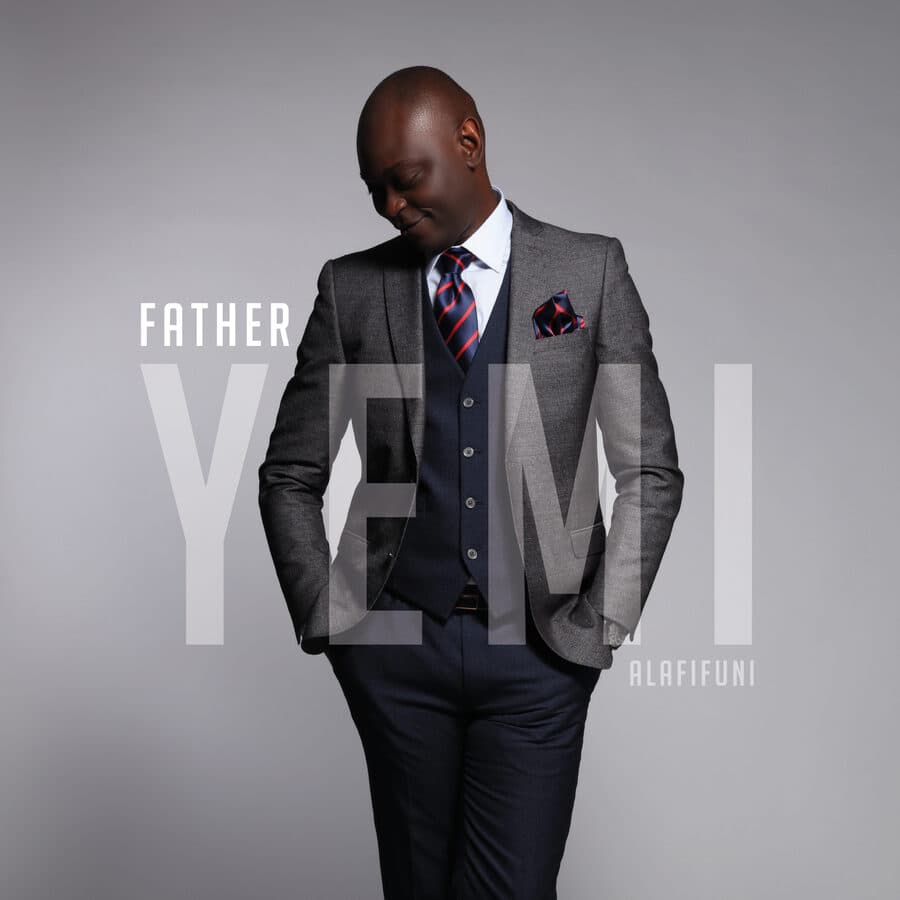
Free downloadMP36:48
Prodigal Father
Prodigal does not mean wayward. It means recklessly extravagant, and the closing song on the album gives the word to the Father.
No email, no account, no catch. Yours to keep, and yours to play to a congregation.
A prayer
Father, your Son told us that if we, who are far from good, know how to give good gifts to our children, how much more will you give good things to those who ask you (Matthew 7:11). Some of us sing that easily. Some of us find the word "father" hard. Meet each of us where we are. "Behold, what manner of love the Father hath bestowed upon us, that we should be called the sons of God" (1 John 3:1, KJV): let that be where we find who we are, on the days we do well and on the days we fall short. By "the Spirit of adoption, whereby we cry, Abba, Father" (Romans 8:15, KJV), teach us to talk with you from the heart. In Jesus' name, amen.
Sources
Scripture
- Scripture quotations are from The Authorized (King James) Version. Rights in the Authorized Version in the United Kingdom are vested in the Crown. Reproduced by permission of the Crown's patentee, Cambridge University Press.
- Matthew 7:11, Matthew 10:29, Mark 10:18, Luke 15:20, Romans 8:15–16, Galatians 4:7, 1 John 3:1, Psalm 68:5 and Isaiah 9:6, King James Version on the Bible App, read 21 October 2026
The song and its history
- Good Good Father, song page, Worship Together (Capitol CMG Publishing): writers, CCLI number, scripture references and the quoted line, read 21 October 2026
- Good Good Father, PraiseCharts: copyright line, read 21 October 2026
- Housefires II, Official Charts Company
- "Chris Tomlin & Lauren Daigle Lead Christian Charts", Billboard, on the charts dated 24 October 2015
- "Chris Tomlin releases music video for 'Good Good Father' as single hits No. 1 on Billboard Christian Airplay chart and Mediabase Christian Audience chart", The M Collective, 24 February 2016
- "Lauren Daigle leads with three wins at 47th annual GMA Dove Awards", Gospel Music Association, 11 October 2016
- Gold and Platinum database, Chris Tomlin, "Good Good Father", RIAA, certified 27 September 2021
- "Housefires announces How To Start A Housefire (Part III) out 11.3 via Capitol CMG / TRIBL Records", Shore Fire Media, 20 October 2023
- "Housefires creates community, sets hearts ablaze with How To Start A Housefire (Part III)", Shore Fire Media, 3 November 2023
- CCLI Top 100 (2016), No. 1, Hymnary.org
What the writers have said
- Efrem Graham, "Exclusive: Hear the beautiful story behind worship song 'Good Good Father'", CBN News, 5 March 2017
- Jonathan Bellamy, "Pat Barrett: The 'Good, Good Father' man now recording for Chris Tomlin's label", Cross Rhythms, 8 August 2018
Readings and criticism
- Andrea Lucado, "Good Good Father: a song devotional", Worship Together, 2015
- Matthew Boffey, "Good Good Father: a song to recalibrate hearts", Logos, 5 April 2018
- Chris Mellon, "Is 'Good Good Father' biblical?", The Berean Test, 26 August 2018
- Jonathan Aigner, "Chris Tomlin's 'Good, Good Father' wins GMA Song of the Year", Ponder Anew, Patheos, 19 October 2016
- Jonathan Aigner, "'Good, Good Father' is a bad, bad song. That's what it is.", Ponder Anew, Patheos, 20 June 2020
- James Barr, "'Abbā isn't "Daddy"'", Journal of Theological Studies 39, no. 1 (1988): 28–47, quoted from page 46 by Glenn Stanton, "FactChecker: Does 'Abba' mean 'Daddy'?", The Gospel Coalition, 13 May 2013
Yemi Alafifuni
- Prodigal Father and Padre: song notes, verses and lyrics on this site
- Songs about God as Father, journal, 27 October 2026