
On average, children whose father is absent from the home do worse than children whose father is there, and the strongest studies find the clearest effects on finishing school, behaviour and adult mental health. The effects are real, but smaller than the statistics passed around online, and they are averages: many children raised by one parent do well. Presence alone is not the point either. What helps a child is a father who is warm, steady and safe.
On this page: what absence does · how many children · fatherless statistics, checked · the strongest research · sons and daughters · when a present father harms · what good fathers do · fathers and AI · what the Bible says a father is · if you grew up without a father · the song · this week · a prayer · questions
What happens to children when fathers are absent?
Children who grow up without their father in the home are, on average, less likely to finish school and more likely to have behaviour problems as children and mental health problems as adults. That is the conclusion of a leading review of the studies built to test cause and effect, by Sara McLanahan, Laura Tach and Daniel Schneider in the Annual Review of Sociology (2013). The studies built to separate cause from coincidence "continue to find negative effects of father absence on offspring well-being, although the magnitude of these effects is smaller than what is found using traditional cross-sectional designs."
Absent does not only mean "not in the house". A father can live at home and be absent in every way that matters to a child, and a father who lives elsewhere can be present. A review of 63 studies of fathers who do not live with their children found that how often they saw them "was not related to child outcomes in general". What mattered was closeness and "authoritative parenting": warmth with clear limits (Paul Amato and Joan Gilbreth, Journal of Marriage and the Family, 1999). An emotionally absent father at home and a loving father across town are not the same thing, and the research treats them differently.
None of this is a verdict on single mothers, or on the children they raise. The findings are averages across very different families, and the confounders are real: poverty, conflict between parents before they separated, the mother's education, and the plain fact that the families who split up differ from those who stay together before anyone leaves. Many children of lone parents do well. In 2025, 15.4% of lone parents in the UK were fathers (ONS, 17 April 2026), so "lone parent" does not always mean a missing father either.
When I was asked what I most want men to hear, my answer came down to two words, staying power: "the core nature of fathers is their staying power." The rest of this page is the evidence for that sentence, and what it asks of us.
How many children grow up without a father?
Nobody counts it exactly. Every national survey below counts the same thing: whether a child's father lives in the same household on the day the survey is taken. None of them records whether a father who lives elsewhere sees his children every weekend or has never met them, and a child in a two-parent home may be living with a stepfather rather than their own father. So the honest phrase is "living in a household without their father", which is narrower and wider than "growing up without a father" at once. ONS says the same about its own figures: "The definition of a lone parent does not make any distinction between situations where a child has regular contact and/or partly resides with their other parent and a child who solely resides with and is cared for by one parent."
| Country | What the figure counts | Figure | Source |
|---|---|---|---|
| UK | Lone-parent families, as a share of all families (with or without children). ONS no longer includes Northern Ireland in these survey estimates | 3.2 million, 16.0% of families; 15.4% of lone parents are fathers (2025) | ONS, Families and households in the UK: 2025, 17 April 2026 |
| UK | Dependent children living in a lone-parent family | 3.2 million, 21.5% (2025); 22.8% in 2014. Of lone parents with dependent children, 87% are mothers | ONS, Families and households in the UK: 2025 dataset, Tables 1 and 4, 17 April 2026 |
| England and Wales | Dependent children in lone-parent families (not stepfamilies) who stayed at a second parent's or guardian's address for more than 30 days a year | 12.8% (2021) | ONS, Children in families in England and Wales: Census 2021, 5 March 2024 |
| US | Children under 18 living with their mother and no father (biological, step or adoptive) in the household | 21%, 15.3 million (2020); 22% (2022) | US Census Bureau, 12 April 2021; America's Children 2023 |
| US | Children living with both biological parents | 62.5% (2019), against 70.1% living with "two parents" of any kind | US Census Bureau, Living Arrangements of Children: 2019, February 2022 |
| Nigeria | Children under 18 living with their mother only (father alive or dead) | 11.0%; 75.4% live with both parents (2018; the NDHS 2023–24 report was not checked) | Nigeria DHS 2018, as compiled by Better Care Network |
| South Africa | Children living with their mother only | 45.9%; 31.4% live with both parents; 7.3% have lost their father (2025) | Statistics South Africa, General Household Survey 2025, 26 May 2026 |
| Kenya | Children under 18 living with their mother only (father alive or dead; Better Care Network does not split this by whether the father is alive) | 27.3%; 52.5% live with both parents (2022) | Kenya DHS 2022, as compiled by Better Care Network |
The picture changes a great deal between countries. In South Africa almost two children in three do not live with their biological father (45.9% with their mother only and 18.5% with neither parent, my sum), and only a small part of that is because the father has died. In Nigeria three children in four live with both parents. It has also moved a long way in fifty years:
- United States: 11% of children (7.6 million) lived with their mother only in 1968. By 2020 it was 21% (15.3 million). Children living with two parents fell from 85% to 70% (US Census Bureau, 12 April 2021). Before 2007 the survey counted two parents only when they were married, so the two figures are not measured in quite the same way.
- Great Britain: in 1971, 8% of families with dependent children were headed by a lone parent. By 1998 it was 25%, and in 2011 it was 22% (ONS, General Lifestyle Survey 2011, 7 March 2013). Lone mothers headed 7% of those families in 1971 and 20% in 2011.
Fatherless statistics, checked
Page after page that ranks for "fatherless statistics" repeats the same list: 63% of youth suicides, 90% of runaways, 85% of young people in prison and so on "come from fatherless homes", credited to "the US Department of Health" or "the Bureau of the Census", with no table, year or link. The list has been read into the US Congressional Record (14 June 2013) and quoted in speeches. Most people who share it do so in good faith, because they believe something true: that fathers matter. So I traced each claim as far back as I could, on 20 October 2026, and set it beside the best figure I could find for the same question.
| Claim as repeated | Earliest source found | Does the source say it? | Verdict | A better figure |
|---|---|---|---|---|
| "63% of youth suicides are from fatherless homes" (US Department of Health / Bureau of the Census) | None. The Census Bureau does not publish suicide data, and the US death certificate has no question about who the person lived with | No source found | No traceable source | Sweden, 1991–99: children of lone parents were about twice as likely to attempt suicide, after adjustment (RR 2.0 girls, 2.3 boys; The Lancet, 2003). "Lone parent" there includes fathers |
| "90% of all homeless and runaway children are from fatherless homes" | None. The nearest older source (a 1989 journal article, cited in 1990) says homeless youth are "more likely" to come from single-parent families, with no percentage | No source found | No traceable source | The US national runaway study (Office of Juvenile Justice, October 2002) does not report family structure |
| "85% of all children who show behavior disorders come from fatherless homes" (Center for Disease Control) | The likely source is the CDC's 1988 child health survey (published June 1991) | No. It reports rates within each family type, and its own figures imply a far smaller share than 85% | No traceable source | Same survey, children aged 3 to 17: 8.8% of those with a formerly married mother, and 4.4% with a never-married mother, had been treated for emotional or behavioural problems in the past year, against 2.7% living with both biological parents |
| "80% of rapists motivated by displaced anger come from fatherless homes" (Criminal Justice and Behavior, "1978") | Knight and Prentky, Criminal Justice and Behavior 14 (1987), a study of 108 convicted men judged sexually dangerous. The lists give the year as 1978 | Partly. As first restated (1988), it describes one subtype within those 108 men, and says "single-parent homes", not "fatherless" | Traced but outdated (1987), and overstated | None. A study of 108 men in custody cannot say how many boys from any kind of home go on to offend |
| "71% of all high school dropouts come from fatherless homes" (National Principals Association) | No organisation or report by that name found | No source found | No traceable source | Finishing school is one of the outcomes with the strongest evidence of a real effect of father absence (McLanahan, Tach and Schneider, 2013) |
| "75% of all adolescent patients in chemical abuse centers come from fatherless homes" (Rainbows for All God's Children) | Rainbows is a children's grief-support charity. No research by it on treatment patients found | No source found | No traceable source | Sweden, 1991–99: about three to four times the risk of drug-related illness, after adjustment (RR 3.2 girls, 4.0 boys; The Lancet, 2003) |
| "85% of all youths in prison come from fatherless homes" (Fulton County, Georgia; Texas Department of Corrections, 1992) | No document found | No source found | No traceable source | US young people in custody, 2003: 30% had been living with two parents, 45% with one and 25% with neither (Office of Juvenile Justice, December 2010) |
| "70% of youths in state institutions come from fatherless homes" (US Department of Justice, September 1988) | Survey of Youth in Custody, 1987, Bureau of Justice Statistics, September 1988, 2,621 young people | Partly. "About 70 percent" did not live with both parents while growing up, which includes those living with a lone father or grandparents | Traced but outdated (1987 data), and overstated | Same 2003 figures as above. In 1988, roughly 39% of all US children did not live with both biological parents (CDC, 1991), so the over-representation was real |
| "18.2 million children (1 in 4) live without a biological, step, or adoptive father in the home" (National Fatherhood Initiative, citing the Census Bureau) | US Census Bureau, Current Population Survey | Yes. In 2020, 21% lived with their mother only and 4% with neither parent | Supported, as a household measure | As stated. It counts the home, not the relationship |
| "About 1 in 3 children live without their father" (Fathers 4 Justice, citing the Office for National Statistics) | ONS, Families and households in the UK: 2012 | Partly. ONS put 24% of dependent children in lone-parent families in 2012, about 1 in 4, not 1 in 3; 91% of lone parents with dependent children were women | Supported but overstated | About one in four dependent children lived in a lone-parent family in 2012 (24%), and about one in five in 2025 (21.5%), not one in three; "fatherless" is stronger than the data |
The "times more likely" figures that often travel with the list (five times, nine times, twenty times, thirty-two times) are not separate evidence. Each one can be rebuilt from its own percentage by assuming that about a fifth to a quarter of children live without their father, so they appear to be arithmetic on the same unsourced numbers, not separate evidence (my calculation).
Fathers matter. The real evidence makes that case better than the invented numbers do, and it survives being checked.
What does the strongest research show?
Most of the research behind the familiar claims compares children of lone mothers with children of married parents. But the two groups differ before any father leaves, in income, in how much the parents fought, in the mother's education and health, and a simple comparison counts all of that as the effect of the father's absence.
McLanahan, Tach and Schneider (2013) reviewed the studies built to get round that problem: following the same children before and after a father leaves, comparing brothers and sisters who spent different amounts of time with their father, using natural experiments, and matching similar families. Their conclusions:
- Strongest evidence: behaviour problems in childhood ("particularly by increasing externalizing behavior"), finishing school ("strong and consistent negative effects... on high school graduation"), risky teenage behaviour such as smoking and early childbearing, and adult mental health.
- Weaker evidence: "There is weaker evidence of an effect of father absence on children's cognitive ability", meaning test scores and IQ.
- Size: "estimates from IFE, SFE, and PSM models are smaller than those from conventional models" (fixed-effects, sibling and matching models). In plain words, the more carefully you account for everything else, the smaller the effect gets, though it does not disappear.
The Swedish study in The Lancet (Ringbäck Weitoft, Hjern, Haglund and Rosén, 2003) followed almost every child in the country through the 1990s, about 65,000 with one parent and 921,000 with two. After adjusting for socioeconomic status and for addiction or mental illness in the parents, children living with one parent still had about twice the risk of being admitted to hospital after a suicide attempt. That is a serious difference. It is also a long way from "63% of youth suicides": a doubled risk in a group that is a minority of children cannot produce a 63% share, and the study counted attempts, not deaths.
If you are struggling, Samaritans are there day or night on 116 123 (UK and Ireland, free; checked on samaritans.org, 20 October 2026).
A review of 24 publications from 16 long-term studies of fathers' involvement found that 22 reported benefits, including fewer behaviour problems in boys, fewer psychological problems in young women and less delinquency in poorer families (Anna Sarkadi and colleagues, Acta Paediatrica, 2008). The authors warn that "almost all studies in this overview are subject to methodological criticism", and that the families studied were mostly well off, white and intact. It is good evidence, short of proof.
The economist Melissa Kearney made the wider case in The Two-Parent Privilege (University of Chicago Press, 2023): that children raised by two married parents have advantages that money alone does not explain. Scott Winship, broadly sympathetic, wrote that "single parenthood is not distributed randomly" and that she "gives somewhat short shrift" to that problem (Education Next, Winter 2024). Will Holub-Moorman, drawing on the writer Matt Bruenig, argued in the Boston Review (5 October 2023) that comparisons of married and unmarried families cannot show what marriage itself does.
Raj Chetty and colleagues, using records covering nearly the whole US population, found that the few neighbourhoods where the gap between black and white boys from families on the same income was small had "high rates of father presence among blacks" (Quarterly Journal of Economics, 2020). That is about the fathers in the neighbourhood, not whether a boy's own father lived at home. The same paper says a child's own parents' marital status explains little of the gap once income is held constant. It is a correlation, not proof, but fathers may matter to the children around them, not only to their own.
Is it different for sons and daughters?
The evidence is mixed, and it leans one way. Boys appear somewhat more affected in behaviour and schooling. Girls show specific risks around early sexual activity and teenage pregnancy. Neither is spared.
- McLanahan, Tach and Schneider (2013) say the effects "may be more pronounced for boys than for girls", and they choose the word "may" with care.
- Marianne Bertrand and Jessica Pan, studying US children, found that "boys do especially poorly in broken families" (their term), because boys' behaviour responded much more than girls' to the weaker parenting those homes often had (American Economic Journal: Applied Economics, 2013).
- David Autor and colleagues compared brothers and sisters in the same Florida families and found that "relative to their sisters, boys born to disadvantaged families have higher rates of disciplinary problems, lower achievement scores, and fewer high-school completions" (same journal, 2019). Their measure of disadvantage includes the mother being unmarried at the birth, but is not father absence alone.
- Bruce Ellis and colleagues followed girls in the US and New Zealand from about age 5 to 18. Greater exposure to father absence "was strongly associated with elevated risk for early sexual activity and adolescent pregnancy". Family disadvantage did not explain this in the US sample and explained only part of it in New Zealand (Child Development, 2003). The study had no boys, so it cannot show that daughters are at greater risk than sons.
Does a present father always help?
No. Sara Jaffee, Terrie Moffitt, Avshalom Caspi and Alan Taylor studied 1,116 pairs of five-year-old twins in England and Wales. For most fathers, the less time they lived with their children, the more conduct problems the children had. But "when fathers engaged in high levels of antisocial behavior, the more time they lived with their children, the more conduct problems their children had" (Child Development, 2003). Those children received what the authors called a "double whammy" of inherited and household risk. Their conclusion: "Marriage may not be the answer to the problems faced by some children living in single-parent families unless their fathers can become reliable sources of emotional and economic support."
So "any father is better than no father" is not true. Safety comes first. A father who is violent or abusive is not made good by being at home, and a mother who leaves to protect her children has done the right thing.
If you are worried that a child is being harmed, the NSPCC Helpline is open to any adult on 0808 800 5000 (phone 10am to 4pm, Monday to Friday; email help@nspcc.org.uk, 11am to 4pm every day). Children and young people can call Childline on 0800 1111. Both checked on nspcc.org.uk on 20 October 2026.
What do good fathers actually do?
The Avon Longitudinal Study of Parents and Children has followed families in the south-west of England since the early 1990s. Fathers there were asked about their involvement when their babies were 8 weeks and 8 months old. Their children's behaviour was measured at 9 and 11. Two things were linked to fewer problems: fathers' emotional response to the baby and to being a parent, and how secure they felt in the roles of parent and partner. How often they did the childcare and housework was not. The authors' conclusion: the "psychological and emotional aspects of paternal involvement... rather than the quantity of direct involvement in childcare" are what is associated with good outcomes (Opondo, Redshaw, Savage-McGlynn and Quigley, BMJ Open, 2016).
The same pattern runs through other work. For fathers who live apart from their children, closeness and authoritative parenting predicted better results at school and fewer emotional and behaviour problems; payment of child support was linked to better outcomes too; mere frequency of contact was not (Amato and Gilbreth, 1999). In a British cohort born in 1946, people who remembered their fathers as caring had consistently higher wellbeing, from adolescence into their sixties, even after allowing for their mothers' care, their social class, their parents' separation and their own personality (Mai Stafford and colleagues, Journal of Positive Psychology, 2016).
Fathers are giving more time than they used to. In the US, fathers reported about eight hours a week of childcare in 2016, "about triple the time they provided in 1965", and 63% said in 2017 that they spend too little time with their children, against 35% of mothers (Pew Research Center, 12 June 2019). In the UK, working fathers spent 55 minutes a day on childcare in March 2022, up 16% on 2014–15, against 84 minutes for working mothers (ONS, 22 July 2022).
The law has moved too. Since 6 April 2026, fathers and partners who are employees have had the right to up to two weeks' paternity leave from their first day in a job. Statutory Paternity Pay is £194.32 a week or 90% of average weekly earnings, whichever is lower, but it still needs 26 weeks' service with the same employer and average earnings of at least £129 a week (GOV.UK, read 20 October 2026).
Fathers in the age of AI
Children now have answers on demand. In the UK, 64% of children aged 9 to 17 have used an AI chatbot. Of those who have, 23% have used one for advice, 35% say it is like talking to a friend, and 12% use one because they have no one else to talk to, rising to 23% of vulnerable children (Internet Matters, Me, Myself and AI, 14 July 2025; 1,000 children surveyed in April and May 2025). In the US, 72% of teenagers aged 13 to 17 have used an AI companion (Common Sense Media, July 2025; 1,060 teens).
The Common Sense survey has reassuring numbers. Half of teenagers do not trust the advice AI companions give, and 80% of those who use them spend more time with real friends than with AI.
What follows is my judgement, not data. When answers are everywhere, what children lack is someone who knows them, corrects them because he loves them, and tells them who they are. In the Bible, a father's teaching is about understanding, not facts on demand. "Hear, ye children, the instruction of a father, and attend to know understanding" (Proverbs 4:1, KJV) is about understanding, and Deuteronomy puts the teaching in ordinary life: "when thou sittest in thine house, and when thou walkest by the way" (Deuteronomy 6:7, KJV).
Fathers are not immune to the know-it-all habit. A father who thinks he must have every answer, or whose attention belongs to his phone, models the problem he is worried about. In a small study of 170 US families with young children, parents who struggled with their own phone and device use reported more interruptions to time with their children, and mothers' interruptions were linked to more behaviour problems; fathers' interruptions were not, a result the authors did not expect (Brandon McDaniel and Jenny Radesky, Child Development, 2018). The study was a snapshot, so it cannot show which came first, but many fathers will recognise the habit it describes.
What does the Bible say a father is?
When I was asked what being a father has taught me about God as Father, I gave three words.
Love. As a father, I've learnt the core of being a father is learning to love. Real unconditional love, where all you do is simply for your children.
Vision. I have learnt what it means to have foresight: planning for two generations ahead.
Trust. I think I would feel the deepest of pain and sorrow when my children or wife can no longer trust me. God has never failed me, and I have come to understand that He will never fail me. I can trust Him.
I can't say I have always been faithful to these deep truths. I am still learning how deeply I must mature.
The research above points to a handful of things in fathers. Scripture describes God's fathering in the same terms, which is why I think a good earthly father is best understood as a copy of the first one. Paul says as much: "I bow my knees unto the Father of our Lord Jesus Christ, Of whom the whole family in heaven and earth is named" (Ephesians 3:14–15, KJV). In Paul's Greek, the word for family (patria) is built on the word for father (pater). I have gathered the songs that say so, and the verses under them, in Songs about God as Father.
| What a good father does | What the research shows | How scripture describes God's fathering (KJV) |
|---|---|---|
| Stays | The effects of absence are clearest for finishing school, behaviour and adult mental health (McLanahan, Tach and Schneider, 2013) | "He will not fail thee, nor forsake thee" (Deuteronomy 31:6); "I will never leave thee, nor forsake thee" (Hebrews 13:5) |
| Loves warmly | Fathers' emotional engagement, not how often they did childcare, was linked to fewer behaviour problems (Opondo and colleagues, 2016) | "Like as a father pitieth his children, so the LORD pitieth them that fear him" (Psalm 103:13) |
| Names and blesses the child before any achievement | Adults who remembered caring fathers had higher wellbeing into their sixties (Stafford and colleagues, 2016) | At Jesus' baptism, before he had preached or worked a miracle: "This is my beloved Son, in whom I am well pleased" (Matthew 3:17) |
| Teaches in ordinary life | Active, regular engagement predicts better outcomes; no one form has been shown to work better than another (Sarkadi and colleagues, 2008) | "Thou shalt teach them diligently unto thy children... when thou sittest in thine house, and when thou walkest by the way" (Deuteronomy 6:7) |
| Corrects without crushing | Warmth with clear limits predicts fewer problems (Amato and Gilbreth, 1999); poor support from fathers is linked to delinquency, especially in sons (Hoeve and colleagues, 2009) | "Ye fathers, provoke not your children to wrath" (Ephesians 6:4); "lest they be discouraged" (Colossians 3:21); discipline that "yieldeth the peaceable fruit of righteousness" (Hebrews 12:11) |
| Provides | Child support from fathers who live apart is linked to children's wellbeing (Amato and Gilbreth, 1999) | "How much more shall your Father which is in heaven give good things to them that ask him?" (Matthew 7:11) |
| Plans two generations ahead | Not tested here | "A good man leaveth an inheritance to his children's children" (Proverbs 13:22) |
| Can be trusted | Children of fathers who are "reliable sources of emotional and economic support" do better (Jaffee and colleagues, 2003) | "God is not a man, that he should lie" (Numbers 23:19) |
| Runs to the child who comes home | Not tested here | "When he was yet a great way off, his father saw him, and had compassion, and ran" (Luke 15:20) |
| Defends the vulnerable and gathers the lonely | Black boys do better in the few neighbourhoods with high rates of black fathers' presence, a correlation, not proof (Chetty and colleagues, 2020); mentored children were 46% less likely to start using illegal drugs, about 6% against 11.5% (Big Brothers Big Sisters trial, 1995) | "A father of the fatherless... God setteth the solitary in families" (Psalm 68:5–6) |
| Delights in the child | Not tested here | "He will rejoice over thee with joy... he will joy over thee with singing" (Zephaniah 3:17) |
Three rows are not tested here. Some of what scripture asks of fathers has not been measured, and I would rather leave the cell plain than fill it.
In the English Bible, the Old Testament closes on a promise about fathers. Malachi promises a messenger who "shall turn the heart of the fathers to the children, and the heart of the children to their fathers" (Malachi 4:6, KJV). Luke picks up those words to describe John the Baptist's work, "to turn the hearts of the fathers to the children" (Luke 1:17, KJV). On that account, the work that prepares the way for Jesus begins in families.
If you grew up without a father
If that is you, nothing on this page is a judgement on you, and nothing on it says how your life will go. The research describes averages. You are not an average.
The Bible makes a promise to people in exactly your position. Psalm 68:5–6 calls God "a father of the fatherless" and says he "setteth the solitary in families" (KJV). I have written more about what Psalm 68:5–6 means, including the Hebrew behind "the solitary", and why the Bible keeps turning that promise into an instruction to God's people.
That instruction matters, because the family the psalm promises is very often a church. Chetty's finding and the mentoring trial point the same way: adults who show up for children who are not their own may make a difference. If you are a man in a church, there are children in it who would be helped by a steady adult who keeps showing up, within your church's safeguarding arrangements. I wrote about being planted in a family in a 2017 essay on loneliness, and my song Through moves from "Daddy, where are you" to "Defender of the fatherless". The Father album was written, in my own phrase, for the fatherless generation, and "Father to the fatherless" is the heading of my About page. The story of Padre, the album's opening track, is on its own page.
A Father song
Dance for Love, the second track on Father (2 November 2018), is the one song in my catalogue where the Father does the singing. It is built on Zephaniah 3:17: "he will joy over thee with singing" (KJV). My daughter's voice opens it, telling the listener that the Father sings over them, and she comes back at the end with the last word, 1 Corinthians 13:13: faith, hope and love, and the greatest of them love. A father and a child on one record about the Father is this page in four minutes.
Loads from YouTube when you press play. Nothing is sent there until you do.
Lyric video4:01
Dance for Love
Watch page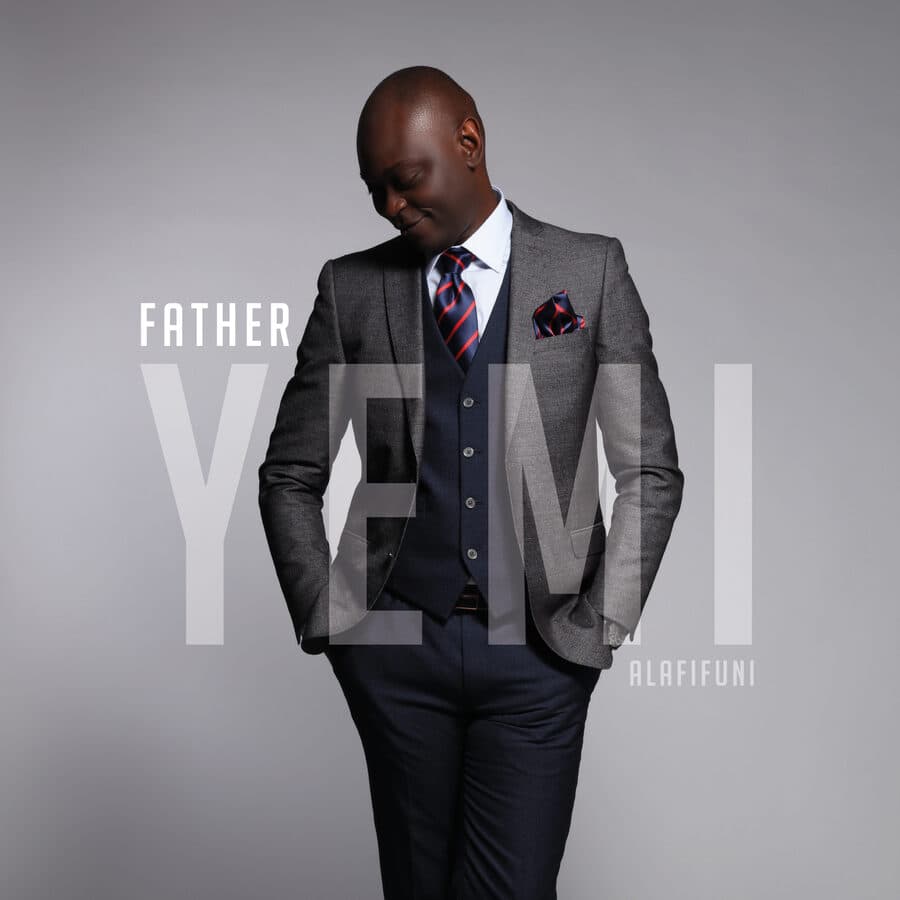
Free downloadMP34:01
Dance for Love
The one song here where the Father does the singing, and both ends of it belong to a child.
No email, no account, no catch. Yours to keep, and yours to play to a congregation.
What can a father start doing this week?
Five things, each tied to the evidence above.
1. Share every moment. My own answer, when I was asked what I do with my daughter that other fathers should try: "Share every moment. Feel their passion, work through their fears with them and cheer every glitter in her eyes. One thing I do that others should try is be your daughter's first love." The first love a daughter knows from a man is her father's, and it shows her what love should look like. It is Deuteronomy 6:7 in practice, teaching "when thou sittest in thine house, and when thou walkest by the way" (KJV), and it is Zephaniah 3:17: a father who delights in his child.
2. Tell them, warmly, who they are. In the Avon study, how often fathers did the childcare was not linked to their children's later behaviour; how they responded to their babies and felt in the role was (Opondo and colleagues, 2016). The Father spoke over his Son before any miracle (Matthew 3:17). Say it before the report card.
3. Put the phone away at fixed times. Meals, the school run, bedtime. The technoference study is small, but the habit is easy to change and costs nothing.
4. If you live apart, stay close and keep parenting. For fathers who do not live with their children, closeness, warmth with clear limits and paying child support predicted how children did; how often they visited did not (Amato and Gilbreth, 1999). An hour that is really with them is likely to count for more than a weekend spent in the same room.
5. Be there for one child who is not yours. A nephew, a neighbour, a child at church, with the family's knowledge and through your church's safeguarding arrangements. In the Big Brothers Big Sisters trial, 959 young people aged 10 to 16 were studied, about half of them offered a mentor by lottery. After 18 months the mentored group were 46% less likely to have started using illegal drugs (about 6% against 11.5%) and about a third less likely to have hit someone (Tierney, Grossman and Resch, 1995). James calls this "pure religion": "To visit the fatherless and widows in their affliction" (James 1:27, KJV).
Underneath all five is what I most want men to hear:
"Life gets hard, people are fickle... moments we can live for are just memories, but the core nature of fathers is their staying power. The ability to keep the God-kind of sanity and equilibrium in a family, if fathers can just stay and hold through the seasons. It is simply miraculous. Be a God-kind of father."
A prayer
Father, every family in heaven and earth is named after you (Ephesians 3:15, KJV), so we come to you first. Thank you that you are the Father who stays. Some of us had fathers who stayed and some did not, and you have seen all of it. Where we were left, be "a father of the fatherless" (Psalm 68:5, KJV). Where we are fathers, make us like you: warm, steady, safe and slow to anger. Turn "the heart of the fathers to the children, and the heart of the children to their fathers" (Malachi 4:6, KJV). Begin with ours. In Jesus' name, amen.
Frequently asked questions
What is an absent father? A father who is not part of his child's life in a meaningful way. Surveys usually count only whether he lives in the same household, but research separates the two: a father at home can be emotionally absent, and a father who lives elsewhere can stay close. Closeness and warm, firm parenting matter more than how often he visits (Amato and Gilbreth, 1999).
How many children in the UK grow up without a father? No survey counts it directly. ONS counts dependent children living in lone-parent families: about 3.2 million, 21.5%, in 2025. Of lone parents with dependent children, 87% were mothers. In England and Wales, 12.8% of children in lone-parent families also stayed at a second parent's or guardian's address for more than 30 days a year (Census 2021).
Are fatherless statistics true? Most of the widely shared ones are not. Of ten common claims checked on 20 October 2026, six had no traceable source. The real research still finds that father absence harms children on average, most clearly for finishing school, behaviour and adult mental health, but by less than those lists claim.
Does an absent father affect daughters and sons differently? Somewhat. Boys appear more affected in behaviour and schooling (Bertrand and Pan, 2013; Autor and colleagues, 2019). A study of girls in the US and New Zealand found a higher risk of early sexual activity and teenage pregnancy (Ellis and colleagues, 2003). The evidence is mixed, and neither sex is unaffected.
What does the Bible say about fathers? That God is the first Father, the one "of whom the whole family in heaven and earth is named" (Ephesians 3:15, KJV), and that earthly fathers are to stay, love, teach, provide and correct without crushing (Ephesians 6:4). He is also "a father of the fatherless" (Psalm 68:5, KJV), which is where children without fathers find their place.
Sources
The main studies
- Sara McLanahan, Laura Tach and Daniel Schneider, "The Causal Effects of Father Absence", Annual Review of Sociology 39 (2013): 399–427, doi:10.1146/annurev-soc-071312-145704
- Gunilla Ringbäck Weitoft, Anders Hjern, Bengt Haglund and Måns Rosén, "Mortality, severe morbidity, and injury in children living with single parents in Sweden: a population-based study", The Lancet 361 (2003): 289–295
- Sara Jaffee, Terrie Moffitt, Avshalom Caspi and Alan Taylor, "Life with (or without) father: the benefits of living with two biological parents depend on the father's antisocial behavior", Child Development 74 (2003): 109–126, doi:10.1111/1467-8624.t01-1-00524
- Charles Opondo, Maggie Redshaw, Emily Savage-McGlynn and Maria Quigley, "Father involvement in early child-rearing and behavioural outcomes in their pre-adolescent children: evidence from the ALSPAC UK birth cohort", BMJ Open 6 (2016): e012034
- Anna Sarkadi, Robert Kristiansson, Frank Oberklaid and Sven Bremberg, "Fathers' involvement and children's developmental outcomes: a systematic review of longitudinal studies", Acta Paediatrica 97 (2008): 153–158, doi:10.1111/j.1651-2227.2007.00572.x
- Paul Amato and Joan Gilbreth, "Nonresident Fathers and Children's Well-Being: A Meta-Analysis", Journal of Marriage and the Family 61 (1999), doi:10.2307/353560
- Mai Stafford and colleagues, "Parent-child relationships and offspring's positive mental wellbeing from adolescence to early older age", Journal of Positive Psychology 11 (2016): 326–337
- Raj Chetty, Nathaniel Hendren, Maggie Jones and Sonya Porter, "Race and Economic Opportunity in the United States: An Intergenerational Perspective", NBER Working Paper 24441 (2018); Quarterly Journal of Economics 135 (2020): 711–783
- Marianne Bertrand and Jessica Pan, "The Trouble with Boys: Social Influences and the Gender Gap in Disruptive Behavior", American Economic Journal: Applied Economics 5 (2013): 32–64
- David Autor, David Figlio, Krzysztof Karbownik, Jeffrey Roth and Melanie Wasserman, "Family Disadvantage and the Gender Gap in Behavioral and Educational Outcomes", American Economic Journal: Applied Economics 11 (2019): 338–381
- Bruce Ellis and colleagues, "Does father absence place daughters at special risk for early sexual activity and teenage pregnancy?", Child Development 74 (2003): 801–821
- Machteld Hoeve and colleagues, "The relationship between parenting and delinquency: a meta-analysis", Journal of Abnormal Child Psychology 37 (2009): 749–775
- Brandon McDaniel and Jenny Radesky, "Technoference: parent distraction with technology and associations with child behavior problems", Child Development 89 (2018): 100–109
- Joseph Tierney, Jean Grossman and Nancy Resch, Making a Difference: An Impact Study of Big Brothers/Big Sisters (Public/Private Ventures, 1995); Jean Grossman and Joseph Tierney, "Does mentoring work?", Evaluation Review 22 (1998): 403–426
- Melissa Kearney, The Two-Parent Privilege (University of Chicago Press, 2023); Scott Winship, "It Takes Two", Education Next 24 (Winter 2024); Will Holub-Moorman, "What Are Families For?", Boston Review, 5 October 2023
Counts of children and families
- ONS, Families and households in the UK: 2025, 17 April 2026, and the accompanying dataset, Table 1 (families by family type and presence of children) and Table 4 (dependent children in families by family type, United Kingdom, 1996 to 2025), with note 8 on the definition of a lone parent
- ONS, Children in families in England and Wales: Census 2021, 5 March 2024
- ONS, General Lifestyle Survey Overview 2011, chapter 3, 7 March 2013
- ONS, Families and households in the UK: 2012, 1 November 2012
- US Census Bureau, "Percentage and Number of Children Living With Two Parents Has Dropped Since 1968", 12 April 2021; Living Arrangements of Children: 2019, February 2022
- Federal Interagency Forum on Child and Family Statistics, America's Children 2023, FAM1
- Better Care Network, country care snapshots for Nigeria (Demographic and Health Survey 2018) and Kenya (Demographic and Health Survey 2022), read 20 October 2026
- Statistics South Africa, General Household Survey 2025, 26 May 2026
The statistics checked
- Deborah Dawson, Family Structure and Children's Health: United States, 1988, NCHS Vital and Health Statistics Series 10 No. 178, June 1991
- Raymond Knight and Robert Prentky, "Developmental antecedents and adult adaptations of rapist subtypes", Criminal Justice and Behavior 14 (1987): 403–426
- Michael Flood, "Dodgy methods and bogus statistics", XYonline, 23 April 2009; Institute Notes 37, the Australia Institute, December 2003
- Allen Beck, Susan Kline and Lawrence Greenfeld, Survey of Youth in Custody, 1987, Bureau of Justice Statistics, September 1988
- Andrea Sedlak and Carol Bruce, Youth's Characteristics and Backgrounds, Office of Juvenile Justice and Delinquency Prevention, December 2010
- Heather Hammer, David Finkelhor and Andrea Sedlak, Runaway/Thrownaway Children, Office of Juvenile Justice and Delinquency Prevention, October 2002
- CDC/NCHS, US Standard Certificate of Death, revised November 2003, for row 1
- Daniel Amneus, The Garbage Generation (Primrose Press, 1990), citing Shane, American Journal of Orthopsychiatry (1989), for row 2; and quoting The Family in America (April 1988), for row 4
- National Fatherhood Initiative, "Father Absence Statistics", undated, read 20 October 2026, for row 9
- Congressional Record, 14 June 2013, E878
- Pages that repeat the list, read 20 October 2026: WifiTalents, ZipDo, The Fatherless Generation, Fathers 4 Justice
Time, leave and technology
- Pew Research Center, "For Father's Day, 8 facts about American dads", 12 June 2019
- ONS, Families and the labour market, UK: 2021, 22 July 2022, from the ONS Time Use Survey
- GOV.UK, Paternity pay and leave, read 20 October 2026
- Internet Matters, Me, Myself and AI, July 2025
- Common Sense Media, Talk, Trust, and Trade-Offs: How and Why Teens Use AI Companions, 16 July 2025
- NSPCC, Helpline, read 20 October 2026
- Samaritans, Contact a Samaritan, read 20 October 2026
Scripture
- Scripture quotations are from The Authorized (King James) Version. Rights in the Authorized Version in the United Kingdom are vested in the Crown. Reproduced by permission of the Crown's patentee, Cambridge University Press.
Yemi Alafifuni
- Yemi's answers to three questions, 19 October 2026, confirmed 20 October 2026
- Dance for Love, Through and Padre: song notes, verses and lyrics on this site
- Songs about God as Father; A father to the fatherless: what Psalm 68:5–6 means; Loneliness; About