
What should a church sing at Christmas? The five nobody will forgive you for leaving out ("O Come All Ye Faithful", "Once in Royal David's City", "O Little Town of Bethlehem", "Silent Night" and "Hark! The Herald Angels Sing") plus two or three more from "The First Nowell", "While Shepherds Watched", "God Rest You Merry", "Joy to the World" and "It Came Upon the Midnight Clear", and at most two modern songs. Below: which of those a congregation can actually sing, in which key, and why the answer is not the one most churches assume.
Before any of that, though, there is a piece of research every worship leader should know, and almost none do.
Who is actually in the room on Christmas Eve?
Most of them are not churchgoers, and the thing they came for is the music. In 2021 Leslie Francis, Susan Jones, Ursula McKenna, Nelson Pike and Emma Williams surveyed 1,234 people at the afternoon carol services on Christmas Eve at Liverpool Cathedral and published the results in Religions. Sixty-two per cent attended church fewer than six times a year apart from weddings and funerals. Nineteen per cent never attend a service at any other time.
Seventy-four per cent called themselves occasional visitors to the cathedral, and forty-three per cent were there that year because they had been there the year before, so it is not a random crowd, but nor is it as settled a congregation as the word "annual" suggests.
Then they asked what brought them. Respondents could endorse more than one reason, and these are the Christmas Eve figures:
| Reason | Endorsed |
|---|---|
| To enjoy the Christmas music | 93% |
| To keep a traditional Christmas | 87% |
| To celebrate Christmas with friends | 85% |
| To remember the Christmas story | 82% |
| To experience the true meaning of Christmas | 78% |
| To worship the Son of God | 59% |
Read the top and the bottom of that together, because both matter. The music is the most widely endorsed reason anyone gives for being there, more than tradition, more than the story itself. And explicit worship comes last, endorsed by a little over half.
That should govern every decision below. It means the carols are not a warm-up for the talk. It means an unfamiliar song is not a mild inconvenience but a failure to deliver the thing most of the room came for. And it means that for a substantial minority who would not say they came to worship, the singing is the only part of the evening they will fully take part in.
A companion study by three of the same authors measured happiness before a cathedral carol service and again near the end, using the Oxford Happiness Questionnaire, and found a small but statistically significant rise across 802 participants. That measures the effect of attending, not of singing specifically, but singing is most of what they did.
The services you are actually planning, and when they fall
Christmas Day 2026 is a Friday. That shapes the whole week.
| Date | Service |
|---|---|
| Thursday 24 December 2026 | Christmas Eve: crib service, Christingle, carol service, midnight |
| Friday 25 December 2026 | Christmas Day |
| Saturday 26 December | Stephen |
| Sunday 27 December | The First Sunday of Christmas |
| Friday 1 January | The Naming and Circumcision of Jesus |
| Sunday 3 January | The Second Sunday of Christmas, or the Epiphany, see below |
| Wednesday 6 January | The Epiphany |
| Sunday 10 January 2027 | The Baptism of Christ |
Two planning notes.
Because Christmas Day is a Friday, Sunday 27 December is a full Sunday service two days later, and in most churches it is the most thinly planned service of the year. More on that below, because the readings appointed for it are not what most people assume, and the two lectionaries British churches use do not agree.
And 3 January can legitimately be two different things. Common Worship's Rules to Order the Christian Year provide that if the Epiphany falls on a weekday it may, for pastoral reasons, be kept on the Sunday between 2 and 8 January. Epiphany 2027 is a Wednesday, so your church may keep 3 January as the Second Sunday of Christmas or as the Epiphany, and the music diverges completely. Find out which before you plan it.
The five they are expecting
Jubilate's carol service guidance names a "famous five" that a traditional service should contain: O come all ye faithful, Once in royal David's city, O little town of Bethlehem, Silent night, and Hark! the herald angels sing.
I would not argue with the list, and given the Liverpool findings I would treat it as close to binding. Greg Scheer, writing for the Center for Congregational Song, puts the same instinct more bluntly in two directives worth pinning above the piano: "Let the people sing. Seriously, this is the one time of the year when everyone wants to sing", with a warning against letting choir items crowd out congregational singing, and "Don't ruin people's favorite Christmas carol." Congregations dislike clever reharmonisations of the carols they love, however interesting the harmony is.
That leaves the real question, which is not which carols but in what key.
What key should carols be sung in?
Lower than your hymnal prints them, in most cases. The range that genuinely suits an untrained congregation is about a sixth wide, most carol melodies are pitched for sopranos, and two of the five reach an E5 in the book many British churches use. Dropping a tone fixes more bad congregational singing than anything else on this page.
Start with what an ordinary untrained voice can do. The standard reference is a 1979 study by Kuhn, Wachhaus, Moore and Pantle of 597 undergraduate non-music majors. Reported in the form most useful here:
| Proportion | Range they could comfortably sing |
|---|---|
| 98% | B♭3 – G4 |
| 84% | G3 – B4 |
| 75% | G♯3 – C5 |
| 50% | E♭3 – E♭5 |
Paul Ryan, writing for Reformed Worship, draws the conclusion: the range that comfortably suits nearly everyone "is incredibly narrow: just a sixth." He notes that hymnal melodies "are pitched for sopranos", commonly reaching D5 and occasionally E5, and recommends dropping the key so the melody stays under C5 where a congregation is singing in unison.
Two caveats before anyone builds a policy on it: the sample was American students in 1979, not a British congregation, and later work has found singers reaching higher at the top than Kuhn recorded. Treat it as the best available benchmark rather than a law.
Now the carols, as printed in the two hymnals most British churches use.
| Carol | New English Hymnal | Ancient & Modern 2013 | Melodic range | Compass |
|---|---|---|---|---|
| O Come All Ye Faithful | G | G | D4–D5 | octave |
| Hark! The Herald Angels Sing | G | F | C4–D5 in F; D4–E5 in G | major 9th |
| Once in Royal David's City | G | F | C4–D5 in F; D4–E5 in G | major 9th |
| O Little Town of Bethlehem | F | F | C4–D5 | major 9th |
| Silent Night | B♭ | B♭ | B♭3–E♭5 | perfect 11th |
| Joy to the World | not listed | D | D4–D5 | octave |
| In the Bleak Midwinter | F | F | D4–D5 | octave |
| God Rest You Merry | E minor | E minor | D4–E5 | major 9th |
| While Shepherds Watched | F | F | not verified | not verified |
| The First Nowell | C | C | not verified | not verified |
| It Came Upon the Midnight Clear | F | F | not verified | not verified |
Three things fall out of that table, and the first one surprised me.
Silent Night has the widest compass in the Christmas repertoire, and it is rarely named as a difficulty. An eleventh is wider than Hark the Herald and wider than O Come All Ye Faithful. In B♭, which is how both hymnals print it, it runs from B♭ below middle C up to the E♭ at the top of the treble stave. The top note lands on "sleep in heavenly peace"; the bottom sits at the final cadence. Because it is sung slowly and quietly, the difficulty is disguised.
It can be helped. Dropped a minor third into G it runs G3 to C5, which sits almost exactly on the 75% band above, and the floor is no worse than the 84% band's. But there is no key where both ends land in the comfortable range, which is what an eleventh means. If your congregation mumbles Silent Night, that is why, and it is not their fault.
"O Come All Ye Faithful" is not the high tune everyone thinks it is. The melody is a plain octave: narrower than Hark the Herald, Once in Royal, O Little Town or God Rest You Merry. In the G major of both hymnals it tops out at D5, inside the ceiling. What gives it a reputation for being hard is not the compass but the delivery: it is loud, fast and belted from the first bar, so any strain is immediately audible. If it is a struggle in your church, look at the tempo and the first phrase rather than at the key.
And your hymnal may be the problem. The New English Hymnal prints Hark the Herald and Once in Royal a tone higher than Ancient & Modern does. Same tunes, same congregations, one book asking for an E5 and the other for a D5. If those two carols always sound like a struggle in your church, check which book you are in before blaming anyone's singing.
The practical fix is unglamorous: take Hark the Herald and Once in Royal down to F if you are in NEH, keep O Come All Ye Faithful in G rather than reaching for A, and accept that Silent Night will sit awkwardly whatever you do. If you use the published descants, transposing the carol takes the descant with it, which is fine.
The tunes that change at the Channel
Worth knowing if you use American resources, because three of these carols have a British tune and an American one, and the recordings your congregation streams may not match your hymnal.
O Little Town of Bethlehem. Britain sings FOREST GREEN; America sings ST. LOUIS. The split traces to one editorial decision: Ralph Vaughan Williams noted the melody in December 1903 from a Mr Garman at Forest Green in Surrey (it was a folk song called "The Ploughboy's Dream"), and paired it with Phillips Brooks's text when he edited The English Hymnal in 1906. ST. LOUIS is Lewis Redner's original, written overnight for Brooks's Sunday school in December 1868.
Away in a Manger. Britain sings CRADLE SONG, published by William Kirkpatrick in 1895; America sings the tune usually labelled MUELLER, which is actually James Murray's, published in 1887 and misattributed to a "Carl Müller" in later collections. While we are here: the carol is not Martin Luther's. That attribution appears to have arisen around 1883, the four hundredth anniversary of his birth, and Richard S. Hill demolished it in a 1945 study. It first appeared in print in an American church newspaper on Christmas Eve 1868.
It Came Upon the Midnight Clear. Britain sings Arthur Sullivan's NOEL, adapted in 1874 from the folk tune behind "Dives and Lazarus"; America sings Richard Storrs Willis's CAROL. The text repays attention: Edmund Sears was a Unitarian minister writing in the shadow of the Mexican–American War, and the hymn never names Christ and never describes the manger. Erik Routley called it the first Christmas hymn in English with a social message.
And one that splits within England rather than across the Atlantic. While Shepherds Watched has more tunes than any carol in the language. WINCHESTER OLD is the standard, but Yorkshire sings it to CRANBROOK, written by a Canterbury shoemaker named Thomas Clark and published in 1805, which the rest of the country knows as "On Ilkla Moor Baht 'at". The pub carol tradition in the West Riding still sings it that way, and it is worth hearing once. Ancient and Modern prints both, at 89a and 89b, with the last line of each verse sung three times.
What the carols are actually saying
Two of the most-sung carols teach doctrine rather than tell the story, and it is worth knowing which.
"O Come All Ye Faithful" has the Nicene Creed inside it. "God of God, Light of Light" is quoted verbatim; "Lo, he abhors not the Virgin's womb" comes from the Te Deum. The second verse is a fourth-century controversy set to music.
"Once in Royal David's City" was written as catechesis. Cecil Frances Alexander published it in Hymns for Little Children in 1848 as the fourth in a series of thirteen hymns, each expounding one clause of the Apostles' Creed. This one takes "conceived by the Holy Ghost, born of the Virgin Mary." It teaches a doctrine to children by making them sing it, which is a method worth remembering.
Against that, three carols carry things that are not in the text at all.
"The First Nowell" has the shepherds following the star. Neither gospel says that: in Luke the shepherds are sent by angels, and in Matthew the star leads the Magi. The carol conflates the two accounts, as our crib scenes do. I have written elsewhere about four things the Christmas story does not say, and the star is one of the tidier examples.
"Ding Dong Merrily on High" sets Christmas words to a sixteenth-century dance tune from Thoinot Arbeau's Orchésographie of 1589. The branle de l'Official was a servants' dance. Its Latin refrain is "Gloria, Hosanna in excelsis", half of which is exactly what the angels said in Luke 2:14, and half of which is the crowd's acclamation on Palm Sunday. Woodward has spliced two events thirty-three years apart into one chorus.
"God Rest You Merry, Gentlemen" is almost universally punctuated wrongly, and the wrong version changes the meaning. The comma belongs after merry: "God rest you merry, gentlemen." Rest here is a verb taking a predicate adjective: "may God keep you merry", that is, at peace and glad. The Oxford English Dictionary records the phrase from 1534, and Shakespeare uses it. Modern English lost that use of "rest", so the comma drifted and the line got read as an address to some merry gentlemen. And it is "you", not "ye", ye is a subject pronoun and cannot take the object position. Most carol sheets print it wrongly.
None of that is a reason not to sing them. It is a reason to know what you are singing, and one sentence from the front costs nothing.
Which modern Christmas songs can a congregation sing?
Very few, and the test on Christmas Eve is narrow and unforgiving: can a room that has never heard this song sing it, cold, first time? On that test "Joy to the World (Unspeakable Joy)" is the only one I would call safe, three or four more work with a strong lead, and several of the best-known are performance pieces whatever the marketing says.
"Joy to the World (Unspeakable Joy)" passes. Chris Tomlin, Ed Cash and Matt Gilder built it on ANTIOCH, which everybody already knows, and added a short repetitive chorus. The verses carry the room; the chorus is learnable in one pass.
"Emmanuel (Hallowed Manger Ground)" (Tomlin and Cash) works: narrow, slow, hymn-shaped, published in C.
"The Candle Song (Like a Candle Flame)" (Graham Kendrick, 1988) works, and its long life in school nativity plays is decent evidence that non-singers can manage it.
"Christ Be Our Light" (Bernadette Farrell, 1993) is structurally the most visitor-proof item here, because the congregation only has to hold the refrain while a cantor takes the verses. It is Advent in character rather than Christmas Day.
Then the ones that need a strong lead and printed words. "Joy Has Dawned" (Getty and Townend) is a fine text with four dense verses and no refrain, excellent for a weekly congregation, risky for annual visitors. "Glory (Let There Be Peace)" and "Noel" both have good choruses and both are published in recording keys, G♭ and D♭ respectively, which tells you who they were pitched for. Transpose before you consider them.
And the ones that are performance pieces. "Light of the World (Sing Hallelujah)" (the We The Kingdom song of 2020, not Lauren Daigle's differently-titled one) has a congregational hook in "sing hallelujah" and very little else a room can hold on first hearing. "Thorns in the Straw" is one of Kendrick's best texts and one of the least congregational. It is a sustained third-person meditation on Mary ("she looked at him", "the child that moved within") with no refrain, no repetition and a narrative arc that needs following rather than joining. Give it to a soloist and let the room listen.
On "What a Beautiful Name", which lands on a lot of Christmas Eve lists: I would not. It is thematically legitimate through John 1, but it splits the room (deeply familiar to weekly attenders, wholly unfamiliar to visitors) in a way carols never do. O Come All Ye Faithful does the same theological work and everybody already knows it.
The tactical principle underneath all of that comes from Kate Keefe, who writes on church music: put the unfamiliar item where the congregation is not expected to sing. Her own example is communion, "while people are away from the pews". Give them the carols everywhere else.
Building the carol service
The Nine Lessons and Carols is younger than most people assume and English in origin.
It was first held at ten o'clock on Christmas Eve 1880, in the wooden shed serving as Truro's temporary cathedral, before about four hundred people. Edward White Benson, then Bishop of Truro and later Archbishop of Canterbury, devised it; both King's College and Truro Cathedral record that the suggestion came from G. H. S. Walpole, then the cathedral's succentor. Benson's son remembered it as "nine carols and nine tiny lessons, which were read by various officers of the Church, beginning with a chorister, and ending, through the different grades, with the Bishop."
King's College adapted it in 1918 under Eric Milner-White, newly appointed Dean at thirty-four after service as an army chaplain, with Arthur Henry Mann directing. A revision in 1919 fixed the opening, and King's own history records that from that date the service has always begun with "Once in Royal David's City". It was first broadcast in 1928 and has run every year since except 1930, through the war. The first television recording (a recording, not a live transmission) was made in 1954.
The classic nine run from Genesis 3 to John 1: the fall, the promise to Abraham, Isaiah's foreshowing, the peace of Christ's kingdom, Gabriel and Mary, the birth, the shepherds, the Magi, and the Word made flesh. Worth knowing that King's itself varies the readings and readers year to year, so the "traditional" order is a scheme rather than a rule.
If you are Anglican, Common Worship: Times and Seasons gives you three complete patterns for a Christmas carol service: one weighted towards justice under the heading "Good News for the Poor", one running straight through Luke's infancy narrative, and the King's nine. It also provides three bidding prayers, the first being Milner-White's.
What it does not do is tell you which carols to sing. Common Worship offers no carol list and no selection guidance whatsoever. That absence is worth naming, because it means every list you read on this subject, including this one, is somebody's judgement.
When does the Christmas season actually end?
Not on Boxing Day, on either of the two reckonings the church actually uses. Rome ends Christmas at the Baptism of the Lord, the Sunday after Epiphany, which in 2027 is 10 January. The Church of England keeps the Christmas season to Epiphany Eve and then runs an Epiphany season through to the Presentation on 2 February. Most churches strip the building on 26 December and sing nothing seasonal again, and neither tradition agrees with that.
Common Worship puts the two reckonings side by side: "The Christmas season is often celebrated for twelve days, ending with the Epiphany. Contemporary use has sought to express an alternative tradition, in which Christmas lasts for a full forty days, ending with the Feast of the Presentation on 2 February." Twenty-fifth of December to the fifth of January is twelve days; to the second of February is forty. Both arithmetics work exactly.
Sunday 27 December 2026 is where that matters most, and it comes with a wrinkle worth knowing before you plan it: the two lectionaries in British use appoint different gospels.
The Revised Common Lectionary gives Luke 2:22–40 for the First Sunday of Christmas in Year B, Simeon and Anna in the temple. Common Worship departs from the RCL here and appoints Luke 2:15–21, the shepherds and the naming of Jesus. So an Anglican parish following Common Worship gets the shepherds; a church on the RCL gets Simeon. Check your book rather than a website, because most lectionary sites online carry the RCL.
Either reading rewards planning. Luke 2:15–21 is the shepherds actually arriving, which is the only part of the nativity most carols never reach, they stop at the announcement. And Luke 2:22–40 is an old man holding a baby and saying he can be dismissed now.
Note too that 27 December is St John the Evangelist in the Common Worship calendar, and some churches will keep the festival rather than the Sunday. If yours does, the readings change again.
If you want one idea from this article, it is that the Sunday after Christmas is worth planning rather than surviving. Keep the crib up. Sing "In the Bleak Midwinter": a plain octave, the most forgiving tune in the repertoire, and its last verse is about what you bring when you have nothing.
And whichever gospel your church reads that Sunday, Simeon arrives for everyone on 2 February. Luke 2:22–40 is the Candlemas gospel in both lectionaries, and Common Worship's Candlemas liturgy turns on a single line: "Here we turn from Christ's birth to his passion." Forty days after the crib, the same infant, and the season closes by looking at Easter.
What the carols are pointing at
Everything above is craft. Which key, which tune, which book, which Sunday, the kind of decisions that matter enormously on the night and not at all in the end.
The carols themselves are a mixed inheritance and this article has said so: a Jacobite may have written one, a Unitarian another, a shoemaker gave Yorkshire its favourite tune, and the most-loved of them all has a range almost nobody can sing. They are human work, and human work is patchy.
What they are pointing at is not. I have written the long version of that elsewhere (years of trying to fill Christmas with new clothes, then friends, then food, then films, and finding that none of it held), and the verses themselves are here, grouped by what they are for.
For a good many people on Christmas Eve, that music is most of their contact with the thing it describes. Ninety-three per cent named it as a reason for coming, more than named the story itself. They will not hear the sermon in a fortnight and they may not remember the readings by January, but they will sing four verses of something their grandmother sang, and for about eleven minutes the words in their mouth will be true whether or not they believe them.
Simeon had waited his whole life for one look at what those carols are about, and when he got it he asked to be dismissed.
Sovereign Lord, as you have promised, you may now dismiss your servant in peace. For my eyes have seen your salvation, which you have prepared in the sight of all nations: a light for revelation to the Gentiles, and the glory of your people Israel.
Luke 2:29–32
A light for revelation to the Gentiles. That is the people who came for the music.
Two Christmas records, free
Both of mine are free to download and to pass on to anyone, with no email and no account. Both are registered with CCLI, so a church can sing them in worship and, under its CCLI licence, project or print the words and report them as usual. "My Christmas" came out of the same years the essay above describes; "Home" is about the people who are not at the table.
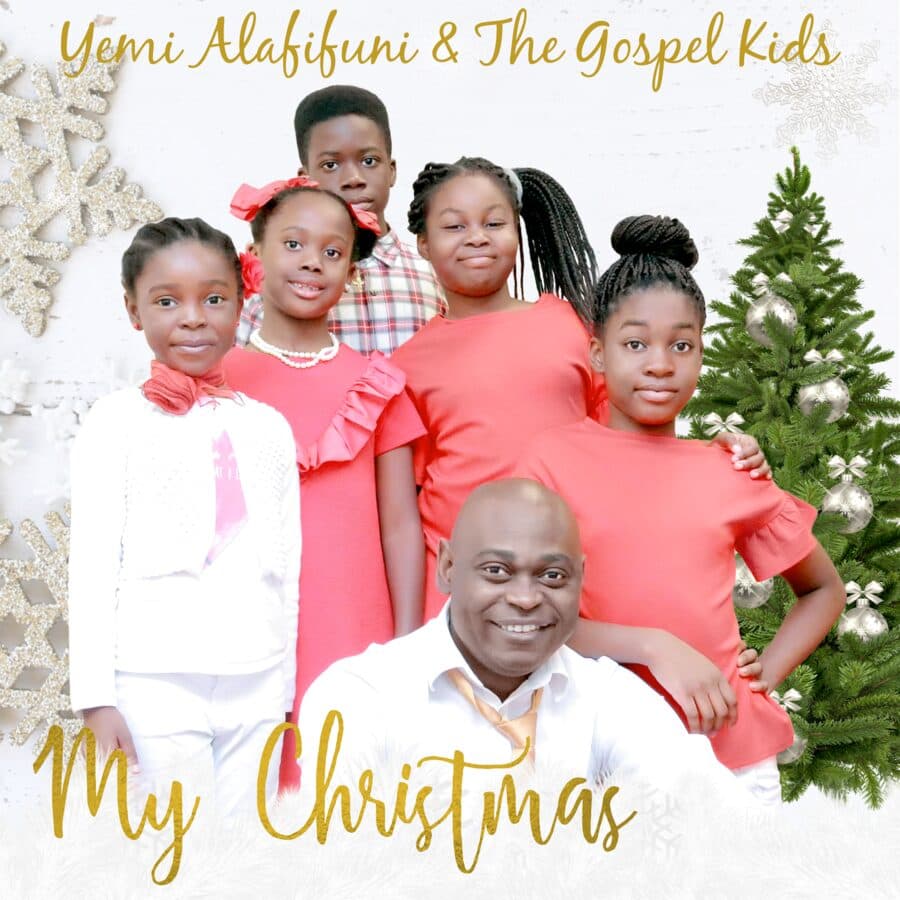
Free downloadMP34:22
My Christmas
Three weeks before it came out he published an inventory of everything he had tried to fill Christmas with, and why none of it worked.
No email, no account, no catch. Yours to keep, and yours to play to a congregation.

Free downloadMP33:26
Home
A Christmas song written to combat loneliness, which is a stranger brief than it sounds, and the reason this one is not just tinsel.
No email, no account, no catch. Yours to keep, and yours to play to a congregation.
Scripture quotations taken from the Holy Bible, New International Version Anglicised Copyright © 1979, 1984, 2011 Biblica. Used by permission of Hodder & Stoughton Ltd, an Hachette UK company. All rights reserved. ‘NIV’ is a registered trademark of Biblica UK trademark number 1448790.
Sources
- Leslie J. Francis, Susan H. Jones and Ursula McKenna, "Belonging through Events? … the Afternoon Carol Services on Christmas Eve at Liverpool Cathedral", Religions 12(2), 2021, and their companion study on cathedral carol services and psychological wellbeing, HTS Teologiese Studies 77(4), 2021
- Kuhn, Wachhaus, Moore and Pantle, "Undergraduate nonmusic major vocal ranges", Journal of Research in Music Education 27(2), 1979, reported in Paul Ryan, "Highs and Lows of Singing", Reformed Worship
- Hymnal keys from Hymnary.org per-edition records for The New English Hymnal and Ancient and Modern (2013)
- Carol origins from the Hymnology Archive · Adeste Fideles, Once in Royal David's City, O Little Town of Bethlehem, Away in a Manger, The First Nowell, It Came Upon the Midnight Clear
- Common Worship: Times and Seasons: Introduction to the Christmas Season, Carol Services in the Christmas Season, The Eucharist of Christmas Night or Morning, and the Rules to Order the Christian Year
- Revised Common Lectionary, Year B 2026–27 · Vanderbilt Divinity Library. Where Common Worship differs from the RCL, the Common Worship Principal Service readings are as printed in the annual Common Worship Lectionary (Church House Publishing), check the printed book rather than a lectionary website
- The Eucharist on the Feast of the Presentation of Christ in the Temple (Candlemas) · Common Worship
- History of the Festival of Nine Lessons and Carols · King's College, Cambridge; Truro Cathedral
- Greg Scheer, "Lessons and Carols Brainstorms": the Center for Congregational Song; Kate Keefe, "Carols in church: a partial guide"; Jubilate, "Planning your carol service?"
- "God Rest Ye Merry, Gentlemen", on the comma and the pronoun